


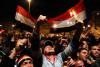


Thailand
Thailand: halt deportation of Karen refugees
Thai rights defenders face online death threats
Human Rights Watch on July 31 called on authorities in Thailand to take urgent measures to address a wave of online death threats and harassment against members of parliament Angkhana Neelaphaijit and Romadon Panjor, as well as human rights activist Anchana Heemmina, after they voiced their disapproval of actions of the Thai military and expressed their support for the Muslim community in the country's Deep South.
AI chatbots shill for repressive regimes
New research from Meta's Oversight Board found commercial large language models (LLMs) from Anthropic, DeepSeek, Google, Meta, OpenAI and xAI are far less likely to criticize repressive leaders and governments. The research calls it "free speech infringements by proxy." Apps and material produced by these generative AI tools could actively reproduce restrictions, including on political criticism. It's unclear why these AI models are doing this—underscoring the need for companies to be transparent and build "human rights due diligence" into the process, before it’s too late. China, Thailand, Cambodia and Saudi Arabia topped the list of countries with the highest refusal rates when LLMs were prompted to create materials criticizing governments.
UN: 'wicked' trafficking for cyber-scam ops
The UN Office of the High Commissioner for Human Rights (OHCHR) on Feb. 20 released a report warning that the rapid expansion of cyber-fraud compounds in Southeast Asia has resulted in widespread human rights abuses. The OHCHR described the phenomenon as a "wicked problem" requiring coordinated, human rights-based responses rather than enforcement-only crackdowns.
Triple-cyclone disaster crystalizes climate threat
A rare convergence of three tropical cyclones with the northeast monsoon has triggered what officials say is the worst flooding to hit South and Southeast Asia in decades. More than 1,600 people have been killed, thousands remain unaccounted for, and whole villages have disappeared under mud and rising water. Roads, bridges, and other vital infrastructure have been torn apart, hampering rescue efforts as communities wait for help. Damage across Indonesia, Thailand, Sri Lanka, Vietnam and other affected countries is expected to top $20 billion, with homes, transport links, factories, farmland, and tourism hubs all severely affected. Farmers lost entire harvests, coastal traders saw their shops washed away, and thousands of families already living on the margins now find themselves with nothing left to rebuild from.
Thailand urged to drop charges against war objector
Amnesty International on Sept. 5 condemned the charges against Thai activist and conscientious objector Netiwit Chotiphatphaisal, who is facing trial for refusing military conscription. The group demanded that Thailand's government drop all charges, asserting that the prosecution violates international human rights law. Netiwit, a former Amnesty International Thailand board member, faces three years in prison under Article 45 of the 1954 Military Conscription Act.
Podcast: Trump for War-is-Peace Prize
In Donald Trump's perverse ambition to win the Nobel Peace Prize, he is citing his supposed diplomatic victories in ending six conflicts: Armenia-Azerbaijan, Congo-Rwanda, Israel-Iran, India-Pakistan, Thailand-Cambodia and Egypt-Ethiopia. In Episode 292 of the CounterVortex podcast, Bill Weinberg examines each of these examples, and breaks down how claims to have won "peace" are either extremely overstated or (more often) total Orwellian jive. The implication that Russia-Ukraine will be next, as Putin escalates his aggression, puts a hideous crown on the irony.
Orwell and the Thai-Cambodia conflict
Cambodia's prime minister, Hun Manet, nominated Donald Trump for the Nobel Peace Prize on Aug. 7, citing his "crucial role" in restoring peace after bloody border fighting with Thailand. The gushy statement praised Trump's "extraordinary statesmanship" and "innovative diplomacy." (NYT)
Cambodia now becomes the third country to nominate the bellicose Trump for the Peace Prize after Israel and Pakistan. Islamabad's nomination followed Trump's supposed involvement in the ceasefire deal with India that ended several days of mutual missile strikes in May. The problem is that India denies that the US or any other foreign power had a hand in its decision to accept a truce. (Hindustan Times)








Recent Updates
1 week 3 days ago
1 week 4 days ago
1 week 4 days ago
1 week 5 days ago
1 week 5 days ago
3 weeks 1 day ago
3 weeks 2 days ago
3 weeks 3 days ago
3 weeks 4 days ago
3 weeks 4 days ago