


Great Game
Podcast: for Palestinian-Uyghur solidarity
In Episode 213 of the CounterVortex podcast, Bill Weinberg notes how divergent responses to the ethnic cleansing of the Palestinians and mass internment of the Uyghurs reveal the West's shifting definition of genocide. Tragically, elements of the Palestinian leadership merely reverse the double standard, causing elements of the exiled Uyghur leadership to balk at supporting the Palestinians. Yet another example of how a global divide-and-rule racket is the essence of the state system. Illustrating the irony, the same corporate nexus is involved in putting in place the surveillance state that monitors the Uyghurs for China and the Palestinians for Israel. Fortunately, principled voices of dissent among both the Palestinians and the Uyghurs are calling for Palestinian-Uyghur solidarity.
Russia creates new Africa Corps
Following the death of Wagner Group leader Yevgeny Prigozhin, the Russian ministries of defense and foreign affairs quickly moved to reassure African client states that business as usual would continue—meaning that Moscow's unofficial boots on the ground would keep operating in these countries. Now reports indicate a transformation, with Wagner's estimated force of 5,000 troops—deployed from the Sahel to Libya to Sudan—to be brought under Defense Ministry command as a new Africa Corps. (The Conversation)
China moves toward recognition of Taliban regime
Chinese President Xi Jinping on Jan. 29 officially accepted the credentials of the envoy to Beijing from Taliban-ruled Afghanistan—a clear step toward recognition of the regime. A month before that, Wang Yi, the Chinese foreign minister, visited Kabul to meet with Taliban foreign minister Amir Khan Muttaqi—the highest-level meeting between China and the Taliban regime since its return to power in 2021. China has already struck hydrocarbon deals with the Taliban, and has been eyeing Afghanistan's lithium, copper and rare-earth metal mines. This is in line with Beijing's perceived design to establish control over the planet's rare earth minerals. (Eurasian Times, CNBC)
Podcast: Iraq, Palestine, escalation and errata
In Episode 212 of the CounterVortex podcast, Bill Weinberg takes stock of the latest escalation in the Middle East—and continues to note discrepancies in the reportage. US air-strikes on Iraq are said to have targeted the self-declared Islamic Resistance in Iraq, and its constituent militias such as Kataib Hezbollah. But some reports indicate the actual target has often been the Popular Mobilization Forces, a paramilitary network integrated into Iraq's official security services. Meanwhile, insufficiently noted media accounts report "no evidence" to back up Israeli claims of Hamas co-optation of UNWRA, which has led to a devastating cut-off of funds to the UN agency by the Western powers.
Neither US imperialism nor Islamic Republic
In Episode 211 of the CounterVortex podcast, Bill Weinberg takes stock of the potential for escalation to world war as Joe Biden retaliates for a deadly drone strike on US forces by an Iran-backed militia with air raids on 85 targets in Iraq and Syria. The same militias that have been attacking US forces in Iraq and Syria have also brutally repressed protesters in Iraq, and fought for the genocidal Bashar Assad regime in Syria. Tehran's paramilitary network has also carried out deadly repression of protests within Iran itself. The Iran-backed Houthis in Yemen, now also coming under US bombardment, are responsible for war crimes against the Yemeni people and repression of their popular movements. It is necessary to oppose Biden's widening of air-strikes against Iran's paramilitaries, but also to oppose the Islamic Republic, equally a force of regional reaction.
Who's arming who in Sudan?
The United Arab Emirates (UAE) has denied arming the paramilitary Rapid Support Forces fighting Sudan's army, despite a leaked UN document alleging "credible" evidence. The UN report said arms and ammunition shipments are unloaded each week from cargo planes at an airport in Chad, and handed to the RSF at the Sudanese border. The UAE has also been accused of funnelling weapons through Uganda and the Central African Republic, part of a regional supply network that has allowed the RSF to "punch above its weight" in the nine-month conflict. But the Gulf State—with business and political interests across Africa—said it has taken no side in the war.
Was drone strike on US forces in Jordan or Syria?
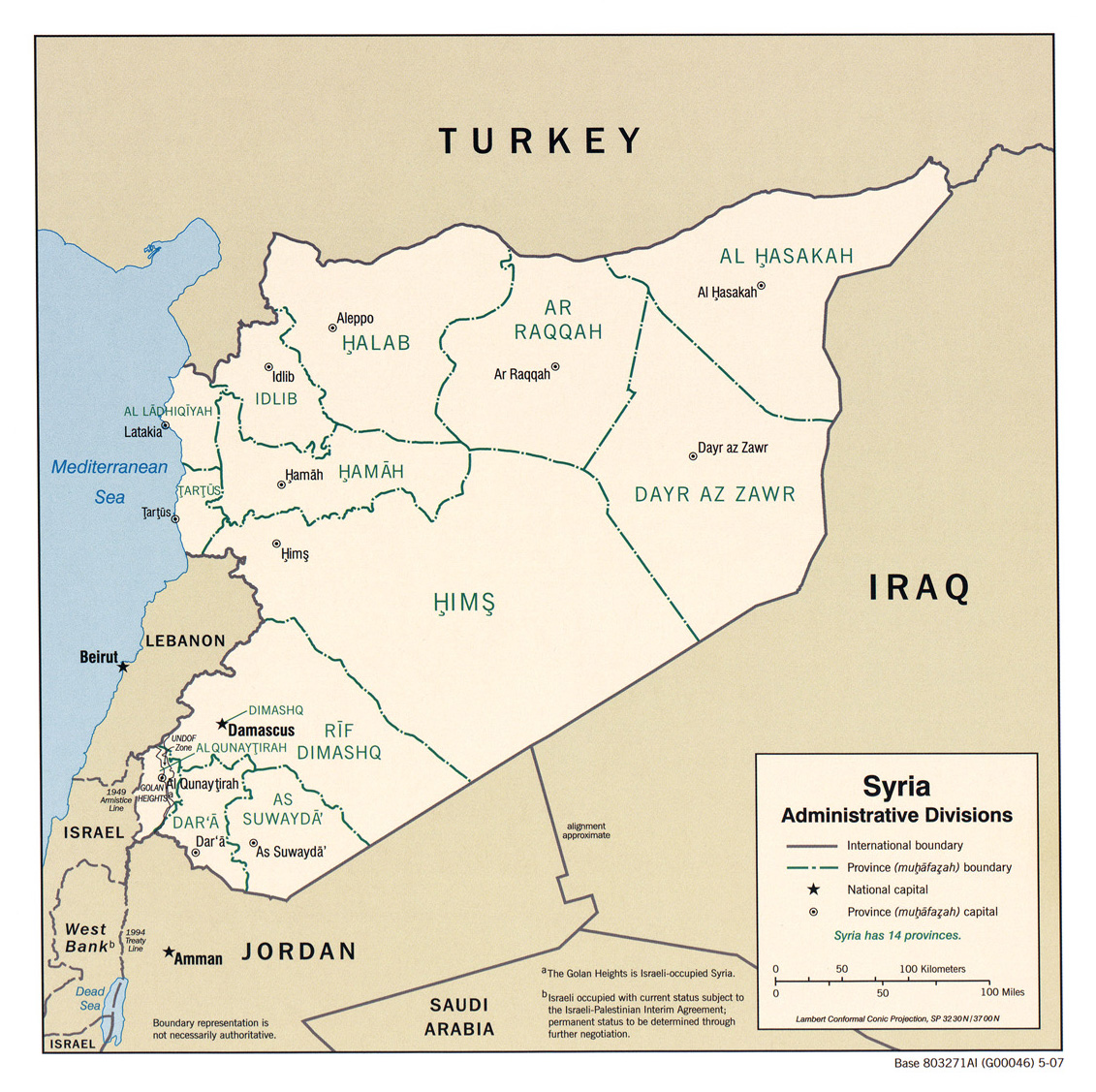
President Joe Biden is pledging undefined retaliation after three US troops were killed and dozens more injured in a drone strike Jan. 28, being blamed on one of the Iran-backed militias that have been harassing US-led coalition forces in Iraq and Syria since eruption of the new Gaza conflict. It is widely reported that the target was a site in Jordan known as Tower 22, which provides logistical support for the US outpost across the border at al-Tanf, Syria—near where the borders of Jordan, Syria and Iraq intersect. However, a communique that day from the umbrella group for Iran-backed factions known as the Islamic Resistance in Iraq did not mention Tower 22, but claimed responsibility for drone strikes on three sites within Syria. These are al-Tanf, the nearby border outpost of Rukban, and Shaddadi—over 200 kilometers away in Hasakah governorate, in the northeastern corner of Syria, near oil fields that are under the control of US-backed Kurdish forces. (See map) (AP, LWJ)
Sahel states defect from ECOWAS
Niger, Mali and Burkina Faso announced they are withdrawing from the Economic Community of West African States (ECOWAS) on Jan. 28, issuing a joint statement saying they had taken a "sovereign decision" to abandon the regional bloc of which they were founding members in 1975. The three countries accused the bloc of failing to support their fight against "terrorism and insecurity," and imposing "llegal, illegitimate, inhumane and irresponsible sanctions." The statement also charged that ECOWAS has "drifted from the ideals of its founding fathers and the spirit of Pan-Africanism," and is now "under the influence of foreign powers." (BBC News, Al Jazeera) This appears to be largely a veiled reference to France, with which all three countries have reduced or severed ties, although de facto bloc leader Nigeria is closer to the Anglo-American camp.







Recent Updates
16 hours 55 min ago
17 hours 40 min ago
17 hours 43 min ago
3 days 17 hours ago
3 days 17 hours ago
2 weeks 23 hours ago
2 weeks 1 day ago
2 weeks 2 days ago
2 weeks 2 days ago
2 weeks 2 days ago