


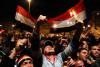


Kuwait
US-Iran war spirals across Middle East
As the US-Iran war escalates, more countries in the Middle East have—officially or unofficially—entered the fray over the past week. Saudi Arabia said July 30 that 14 countries (including Egypt, Türkiye and Bahrain) have so far joined an alliance it set up to protect shipping and energy supplies through the Bab al-Mandeb Strait, Red Sea and Gulf of Aden. The alliance, which the kingdom calls defensive, formed in reaction to the blockade by Yemen's Houthi rebels against Saudi ships in the strait. Among those that has signed on is the internationally recognized (but largely exiled) government of Yemen, which would presumably be onside with reported plans by Saudi Arabia to launch a ground offensive against the Houthis.
Shaky US-Iran ceasefire; escalation in Lebanon
The United States and Iran have signed a Memorandum of Understanding that aims to end the war the US and Israel launched on Iran on Feb. 28. The 14-point agreement, signed by Donald Trump at a June 17 gathering hosted by French President Emmanuel Macron in the Palace of Versailles—where the treaty to end World War I was signed in 1919—opens up the Strait of Hormuz for a 60-day ceasefire window, during which the two sides have vowed to negotiate a long-term resolution to the Iranian nuclear standoff. The US will also terminate all sanctions against Iran, provide $300 billion for post-war reconstruction, and unlock all frozen Iranian funds and assets.
Uncertain ceasefire in Iran
After five weeks of war, the US and Iran on April 8 agreed to a two-week ceasefire brokered by Pakistan. Its basic details, however, and to what extent it will be implemented, are surrounded by uncertainty. A main sticking point is the question of whether Lebanon was included in the deal. Iranian and Pakistani officials are insisting it was, but the US and Israel say that it wasn't. Meanwhile, Israel has continued to carry out devastating attacks on Beirut and other parts of Lebanon.
Escalating repression across Middle East
UN Human Rights Chief Volker Türk warned April 1 that repression of freedom of expression across the Middle East has deepened significantly since the US-Israeli attacks on Iran commenced at the end of February.
'Black rain' falls on Tehran amid US-Israeli strikes
United Nations officials said on March 10 that US and Israeli airstrikes on fuel depots in Tehran have released large amounts of toxic pollutants, producing acidic "black rain" across parts of the capital.
UN demands civilian protection amid Middle East escalation
The United Nations on March 3 urgently called for civilian protection amid growing violence and instability in the Middle East—and particularly in regard to the ongoing US and Israeli military operations against Iran. The UN urged a thorough investigation into a deadly strike on a girls' school in Iran, and requested the disclosure of all relevant information.
'Disappointing' aid for hunger-stricken Yemen
As the country heads into an eighth year of war, Yemen is considered one of the world's largest and most complex humanitarian crises: debilitated basic services, a collapsed economy, an estimated 20.7 million people (more than two thirds of the population) in need—all amid escalating conflict involving numerous different actors. On March 16, the UN appealed to donor states for $4.3 billion in aid for Yemen. Donors coughed up less than a third of that request, with pledges—mainly from Western states—amounting to $1.3 billion. The United Arab Emirates and Saudi Arabia—top donors to Yemen in previous years—pledged nothing, while Kuwait pledged a surprisingly low $10 million. The UN's humanitarian chief, Martin Griffiths, called the result "a disappointment." The outcome is in stark contrast to Ukraine's pledging conference just two weeks prior, considered the "fastest and most generous" response ever to a flash appeal. As the world's attention is fixated on Ukraine, aid workers worry that it could draw resources away from other crises, such as Yemen.
Solidarity with striking Sudan sugar workers
Over a thousand workers at Kenana Sugar Company in Sudan are starting their second month on strike to demand basic trade union rights, increased wages to offset the spiralling cost of living, the removal of figures associated with the old regime from company management, and the reinstatement of 34 workers sacked for taking part in the uprising against dictator Omar el-Bashir last year. Other demands raised by the strikers include renovating the workers' canteen, improvements to health services in the company town, and investment in education for workers' children.









Recent Updates
2 days 7 hours ago
2 days 7 hours ago
1 week 6 days ago
2 weeks 9 hours ago
2 weeks 16 hours ago
2 weeks 1 day ago
2 weeks 1 day ago
3 weeks 4 days ago
3 weeks 5 days ago
3 weeks 6 days ago