


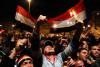


Arab Revolution
UN Commission on Syria: protect civil society
The UN Human Rights Council’s Commission of Inquiry on Syria (COI) announced March 6 that it has completed an in-country mission to Damascus as it prepares to brief the Council in Geneva this week. The Commission said it pressed Syria's transitional authorities on accountability, institutional reform, and protections for civil society amid renewed regional volatility.
Tunisia: activist gets death sentence for Facebook post
Human Rights Watch (HRW) released a statement Oct. 8 condemning the Tunisian justice system for sentencing a man to death for Facebook posts dissenting from government actions. Saber Ben Chouchane was sentenced for posting pictures of himself at recent protests, and statements calling for citizens to take to the streets to demand the release of political prisoners on the upcoming anniversary of the Tunisian revolution of January 2011. HRW called for the Tunisian government to "stop detaining and prosecuting people solely for exercising their right of expression."
Bolivia, Syria & the challenge of plurinationalism
The recent political reversal in Bolivia raises the question of whether the advances of nearly 20 years of rule by the indigenist left will survive—including a constitution that refounded the state as a "plurinational" republic. In Episode 299 of the CounterVortex podcast, Bill Weinberg explores how the lessons of the Bolivian experience can be applied to Syria, where the new revolutionary government faces a challenge in Kurdish and Druze demands for regional autonomy.
Syria: revolution on the razor's edge
The investigation by the Syrian transition government into the March violence against the Alawites in Latakia province has been submitted—but the full findings have not been made public, and it apparently exonerates the government of involvement. Meanwhile southern Suwayda province has seen a perhaps even deadlier eruption of violence—this time pitting Druze against Bedouin, with the role of the government similarly the source of much contestation (and fodder for Internet partisans). And a Damascus protest against the violence and for co-existence was attacked by goons. Amid all this, Israel is militarily intervening, the government looks to Turkey for military aid, and both the US and Russia still have forces on the ground—treating the country as a Great Power chessboard. In Episode 288 of the CounterVortex podcast, Bill Weinberg argues that the Syrian Revolution is poised on a razor's edge, ready to descend into ethno-sectarian war and authoritarianism unless political space can be kept open for the secular-democratic civil resistance that began the revolution 14 years ago.
US removes sanctions amid Syria transition
US President Donald Trump on June 30 signed an executive order that terminates the majority of US sanctions imposed on Syria and associated designated persons, effective July 1. Lifting of the sanctions will represent a significant opportunity for the ravaged Syrian economy. Sanctions against people and entities tied to the ousted Bashar Assad regime, terrorist organizations, and human rights abusers will remain in place.
MAGA-fascism and the Gulf State tyrannies
Amid the hype about how Trump "snubbed" Netanyahu on his Middle East trip come reports that his White House is pushing a plan to relocate some 1 million Palestinians from Gaza to Libya—which is in the midst of a massive human rights crisis. Even while on the ground in Qatar, Trump plugged his relocation scheme for the Gazans, who now face complete ethnic cleansing from the devastated Strip. In Episode 279 of the CounterVortex podcast, Bill Weinberg debunks the notion of a Trump tilt away from Israel, and asks why some "progressives" are joining with paleocons to view massive arms deals with the repressive and arch-reactionary monarchies of Saudi Arabia, the UAE and Qatar as a good thing.
UN Syria envoy: 'fragile' moment in transition process
The UN special envoy for Syria, Geir Pedersen, warned April 25 of grave consequences for the country's future without genuine political inclusion and urgent economic support for a successful political transition. During a briefing to the Security Council, Pedersen noted the legacies of misrule, conflict and exclusion in Syria, stating:
This means that the situation is inherently still extremely fragile. The vital ingredients to address this fragility are clear: we need genuine political inclusion so that all Syrians can participate meaningfully in shaping their country's political future, along with countering extremism and terrorism; and real support from the international community to give this transition a chance to succeed against great odds.
Israeli intervention threatens Syria transition: UN testimony
Israel's ongoing military actions in Syria undermine the Arab country's political transition, and the opportunity for Syria and Israel to form a new security agreement, UN Assistant Secretary General for Political and Peacebuilding Affairs Khaled Khiari said before the Security Council on April 10.








Recent Updates
1 week 1 day ago
1 week 3 days ago
1 week 4 days ago
1 week 4 days ago
1 week 4 days ago
1 week 4 days ago
1 week 6 days ago
1 week 6 days ago
1 week 6 days ago
1 week 6 days ago