




peak food
Sri Lanka to Lima: ripples from Ukraine storm
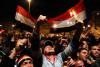
Sri Lanka's President Gotabaya Rajapaksa declared a nationwide state of emergency April 2, as angry protests over fuel shortages and power cuts erupted in the capital Colombo. When police repression failed to quell the protests, Rajapaksa sought to appease demands for his resignation with a purge of his cabinet. The emergency order was lifted April 5—the same day Peru's President Pedro Castillo imposed a curfew in Lima and its port of Callao in response to an eruption of protests over dramatic fuel price hikes. As street clashes broke out in the cities, farmers outraged at a jump in fertilizer costs blocked highways at several points around the country—including Ica, where a toll-booth was set on fire. The world has seen an oil price surge to $100 a barrel in the wake of Russia's invasion of Ukraine. (The Hindu, PTI, NYT, Jurist, Al Jazeera, DW, BBC News, AFP, El Popular)
South Sudan headed 'back to war'
South Sudan's Vice President Riek Machar warned March 28 that the country is heading "back to war" following attacks on his Sudan People's Liberation Movement/Army-in Opposition (SPLM/A-IO) by government forces under President Salva Kiir. The warring parties signed a 2018 peace agreement that led to a unity government two years later. But key parts of the deal have not been implemented, and violence has flared in the countryside. Machar's party suspended its participation in peace deal monitoring mechanisms after claiming that his house had been surrounded by government forces on March 27. As tensions build, humanitarian needs are deepening: more than 70% of South Sudan's population are expected to face extreme hunger this year, while funding constraints and attacks on aid convoys will likely continue to complicate relief efforts.
'Disappointing' aid for hunger-stricken Yemen
As the country heads into an eighth year of war, Yemen is considered one of the world's largest and most complex humanitarian crises: debilitated basic services, a collapsed economy, an estimated 20.7 million people (more than two thirds of the population) in need—all amid escalating conflict involving numerous different actors. On March 16, the UN appealed to donor states for $4.3 billion in aid for Yemen. Donors coughed up less than a third of that request, with pledges—mainly from Western states—amounting to $1.3 billion. The United Arab Emirates and Saudi Arabia—top donors to Yemen in previous years—pledged nothing, while Kuwait pledged a surprisingly low $10 million. The UN's humanitarian chief, Martin Griffiths, called the result "a disappointment." The outcome is in stark contrast to Ukraine's pledging conference just two weeks prior, considered the "fastest and most generous" response ever to a flash appeal. As the world's attention is fixated on Ukraine, aid workers worry that it could draw resources away from other crises, such as Yemen.
Mali: crisis deepens as foreign forces withdraw
France and allied European countries are withdrawing their military forces from Mali after diplomatic relations broke down with the ruling junta that came to power in last year's coup d'etat. The junta has meanwhile reportedly welcomed in hundreds of mercenaries from the Russian Wagner Group. The diplomatic crisis has overshadowed a worsening humanitarian emergency that has seen severe hunger hit the highest level since 2013, when the seizure of large parts of the country by jihadist rebels prompted the French intervention. Over 350,000 people have now fled violence linked to jihadist groups aligned to al-Qaeda and the so-called Islamic State—a nearly 70% increase from early 2020.
Brazil: bill to open indigenous reserves to mining
Under the slogan "Ato Pela Terra" (Stand for the Earth), thousands of protesters, including some 150 indigenous leaders from eight ethnic groups, gathered for the biggest environmentalist demonstration ever held in Brazil's capital on March 9, protesting a series of bills dubbed the "death package" by critics. The package being pushed by President Jair Bolsonaro would open indigenous reserves to a wide range of economic activities, including mineral exploitation. This measure, assailed as unconstitutional, is actually opposed by the Brazilian Mining Institute (IBRAM), which issued a statement calling it "inappropriate" and warning that it would give legal cover to informal "garimpo" mining in the Amazon rainforest. But Bolsonaro maintains the measure is mandated by the Ukraine war, which has threatened supplies of strategic minerals, including the key fertilizer ingredient potassium. Brazil, the world's top soy producer, imports 80% of its fertilizer—20% from Russia, its biggest supplier. (Mongabay, TRT World)
UN warns of 'catastrophic' crisis in Yemen
UN agency chiefs on March 14 stated that war-torn Yemen's hunger crisis is "teetering on the edge of outright catastrophe," with more than 17.4 million Yemenis facing food insecurity and an additional 1.6 million expected to fall into emergency levels of hunger in the coming months. The number experiencing "catastrophic" levels of hunger is projected to increase five times from the current 31,000 to a staggering 161,000, taking the number of those with emergency needs to 7.3 million by the end of 2022. "These harrowing figures confirm that we are on a countdown to catastrophe in Yemen and we are almost out of time to avoid it. Unless we receive substantial new funding immediately, mass starvation and famine will follow. But if we act now, there is still a chance to avert imminent disaster and save millions," World Food Programme executive director David Beasley said.
Ukraine war's fallout on global wheat supplies
One knock-on effect of the war in Ukraine has been a jump in the global price of wheat—to its highest level since 2008. Russia and Ukraine account for a third of the world wheat supply, and Ukraine's most productive regions lie in the path of the conflict. If Ukrainian wheat is taken off the market, or ports are badly damaged, prices could possibly double. That would especially hurt the Middle East and North Africa—but also places as far afield as Bangladesh and Nigeria, which are major importers of Russian and Ukrainian wheat. The real test for the world supply will be the next harvest in four months' time. If Western sanctions target Russian production—or Moscow angrily responds to pressure by squeezing wheat supplies—then shortages could really bite, potentially worsening global huger.
South Sudan: fighting, flooding, aid suspension
Close to 80,000 people have been displaced in Tambura County, in South Sudan's Western Equatoria, as a result of fighting between government forces and the opposition SPLA-IO–even though both sides are supposed to be forming a new unified army. A delay to security sector reform continues to set back implementation of a 2018 peace agreement. The Pretoria-based Institute of Security Studies has warned that South Sudan's "militarized political culture" could see tensions "boiling over"—threatening the national unity government. Faction fighting within SPLA-IO has added to the insecurity. Meanwhile, the World Food Programme is suspending aid to more than 100,000 displaced people in Wau, Juba, and Bor beginning in October—part of a three-month "prioritization exercise" driven by a finance crunch. The fall in funding is despite the country experiencing the highest rate of food insecurity since independence in 2011, with more than 60% of South Sudanese going hungry. Months of flooding has added to that toll.






Recent Updates
12 hours 49 min ago
12 hours 59 min ago
1 week 3 days ago
1 week 4 days ago
1 week 5 days ago
1 week 6 days ago
1 week 6 days ago
1 week 6 days ago
2 weeks 21 hours ago
2 weeks 21 hours ago