



paramilitaries
Sudan transition deal suspended after massacre
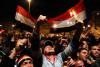
The paramilitary Rapid Support Forces and other troops under the command of Sudan's Transitional Military Council unleashed the deadliest attack yet against protestors at the sit-in site in the capital Khartoum on June 3, leaving at least 35 dead and hundreds injured. The sit-in had been called to demand a swift transition to civilian rule, and followed a two-day general strike to press this demand. In the wake of the massacre, TMC leader Abdel Fattah al-Burhan cancelled the recent power-sharing agreement with the opposition coalition and called for elections within nine months. Opposition leaders reject any elections that take place under military rule. The Sudan Professionals Association is calling for protests to continue, despite the state of siege. (Sudan Tribune, Al Jazeera, 3ayin, Amnesty International)
Suit against French bank over Sudan atrocities
The US Court of Appeals for the Second Circuit in New York City on May 22 reversed a district court's dismissal of a class action lawsuit against French bank BNP Paribas over aiding atrocities in Sudan. The lawsuit was brought in 2016 by 21 refugees from Sudan's ethnic-cleansing campaigns Darfur and South Kordofan regions, alleging that the bank conspired with, and aided and abetted, the Sudanese regime. The plaintiffs' complaint alleges that BNP processed thousands of illegal transactions through its New York offices, which financed weapons purchases and funded militias in a "well-documented genocidal campaign." The reversal comes nearly five years after BNP pleaded guilty to committing large-scale violations of sanctions against Sudan, Cuba and Iran, which resulted in a record $8.97 billion fine.
Burkina Faso faces 'unprecedented' crisis
Attacks by Islamist militants, military operations, and waves of inter-communal violence have left hundreds dead and tens of thousands displaced since January in the West African nation of Burkina Faso, triggering an "unprecedented" humanitarian crisis that has caught many by surprise. Homegrown militant groups, as well as extremists linked to al-Qaeda and the so-called Islamic State group, had been operating in the country's north since 2016, but have expanded to new fronts in eastern and southwestern Burkina Faso, threatening the stability of neighboring countries. Militants now launch near-daily attacks on Burkina Faso's embattled security forces, which have responded by committing numerous abuses against civilians in "counter-terrorism" operations, including mass summary executions and arbitrary arrests, according to witness accounts and rights organizations. As the state struggles to protect civilians, a growing number of "self-defense" militias have mobilized, escalating ethnic tensions in a country once considered a beacon of coexistence and tolerance in West Africa.
Shi'ite militia forces 'sweep' Iraq-Syria border
Baghdad's irregular Hashd al-Shaabi militia has joined with the National Defense Forces, one of the Assad regime's paramilitary militias, to conduct "sweeps" along the Iraqi-Syrian border for remnant ISIS cells. "The Syrian Army and the National Defense Forces in Deir Ezzor in cooperation with the Iraqi Army and [other Iraqi] forces, are participating in combing the border strip between Syria and Iraq, departing from the city of Al-Bukamal towards the outskirts of the Tanf oil field," an NDF statement read. These are both sectarian Shi'ite formations backed by Iran, which has a massive military presence in Syria and has also been backing Iraqi pro-government forces against ISIS. (Defense Post)
Assad, Russia launch Idlib offensive
The Assad regime and allied militias, backed by Russian air-strikes, this week launched the long-feared offensive on Idlib, the northwest Syrian province that is the last under rebel and opposition control. The offensive places at risk the lives of more than 4.5 million civilians. Just this month, a further 150,000 people have been forced to flee their homes in Idlib, joining the ranks the displaced. The UN has previously warned that an assault on Idlib could cause "the worst humanitarian catastrophe the world has seen in the 21st century." At particular risk are 350,000 people living in displacement camps, who have no protection from the bombs. The more recently displaced are now without any shelter on lands near the Turkish border, which Ankara has shut to prevent a refugee influx.
Russia-Iran alliance in Syria unraveling?
Reports are emerging of a clash between Russian forces and an Iran-backed militia in Syria—pointing to mounting tensions between the two most significant foreign powers backing the Assad regime. At least 11 were killed in the fighting in the city of Aleppo April 16. The clash began near a vegetable market in Khaldiya district, and quickly escalated to the use of heavy weaponry, with ground-to-air missiles fired on nearby areas within the city. At least some of the casualties are believed to be civilians. The militia was unnamed, but Tehran is backing numerous Shi'ite militias in Syria, many made up of volunteers from Iran and Iraq. The clash followed recent Israeli air-strikes on Iranian targets near Aleppo, and Tehran-backed factions apparently accused Russia of green-lighting Israel's attacks, or even coordinating with Tel Aviv on the strikes. (Syria Call, Middle East Monitor, Arab Weekly)
Venezuela: troops fire on indigenous protesters
Venezuelan army troops reportedly opened fire on indigenous protesters who were blocking a road near the Brazilian border Feb. 23, leaving several dead. Opposition lawmaker Américo de Grazia, from the southern state of Bolívar, announced on his Twitter feed that morning that soliders opened fire as protesters, including many from the local Pemón indigenous group, contended with troops attempting to bar the passage of trucks filled with aid coming in from Brazilian territory. The first victim was said to be a Pemón woman who was on the scene as a food vendor. A second Pemón was slain shortly later, and another 14 wounded, de Grazia said. He added that several troops, including the commander on the scene, were subsequently taken captive by Pemón warriors and are being held at the nearby indigenous community of Kumarakapay. De Grazia tweeted later in the day that the 14 Pemón who had been taken to a nearby hospital after being shot also succumbed to their wounds.
Colombia sliding deeper into internal war
Under pressure to address the ongoing wave of targeted assassinations in Colombia, President Iván Duque Jan. 30 for the first time spoke before the National Commission to Guarantee Security, formed by the previous government to address continuing violence in the country—which has only worsened since he took office last year. Duque said 4,000 people are now under the government's protection program for threatened citizens. But his office implied that the narco trade is entirely behind the growing violence. Interior Minister Nancy Patricia Gutiérrez told the meeting: "This great problem is derived from the 200,000 hectares of illicit crops that we have in Colombia." (Espectador, Jan. 30)








Recent Updates
1 day 15 hours ago
1 day 16 hours ago
1 day 16 hours ago
1 day 16 hours ago
1 day 16 hours ago
1 day 16 hours ago
1 day 16 hours ago
1 day 16 hours ago
1 day 17 hours ago
1 day 17 hours ago