


conspiranoia
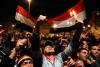
Egypt: court dismisses case against Mubarak
A Egyptian court on Nov. 29 dropped charges against former president Hosni Mubarak, dismissing the case. Judge Mahmoud Kamel al-Rashidi, who read the decisiom for the three-panel court, stated that charges should have never been brought. Critics alleged that the postponed ruling is a political one, but Rashidi denies that the decision had anything to do with politics and encouraged critics to read the court's reasoning. Mubarak, his former security chief Habib al-Adly and six former government aides were being retried on charges of corruption and complicity in the killing of more than 100 protesters during the country's 2011 uprising. The charges against Mubarak's government aides were also dropped. The court's decision may be appealed.
Peshmerga come to aid of Kobani: strings attached?
Iraqi Kurdish Peshmerga troops have entered the battle for the ISIS-besieged Kurdish town of Kobani in northern Syria, after having been allowed to pass through Turkish territory to approach the town from the north—the only remaining access. The sound of heavy weaponry the Peshmerga fighters brought with them from Iraq echoed across the Syrian-Turkish border, according to a team from the independent Kurdish news agency Rudaw on the Turkish side. And US-led coalition planes coninued to strike ISIS positions outside Kobani in the most intense bombing in weeks, with local witnesses counting between five and seven air-strikes overnight. Peshmerga forces are now fighting alongside the PKK-aligned People's Protection Units (YPG), the Kurdish militia that has been leading the defense of Kobani.
US arms Kobani defenders —heightening contradictions
The US has started to air-drop weapons and medical supplies to Kurdish militia defending the north Syrian town of Kobani against ISIS forces—the first such drops to resistance fighters in Syria. In a statement Oct. 19, US Central Command said C-130 cargo planes made multiple drops of arms and supplies provided by Kurdish authorities in Iraq. (AP) And in an astonishing development that reveals the degree of pressure on Turkey, President Tayyip Erdogan agreed to allow Kurdish fighters to cross into Syria. (AP, BBC News) A critical distinction, however, is that Ankara is only allowing Iraqi Peshmerga troops to pass through Turkish territory to reach Kobani from the north. The accounts say nothing about allowing PKK fighters to pass. And Erdogan is even now continuing to oppose US arming of the People's Protection Units (YPG), the PKK-aligned militia that is defending Kobani. (Chinatopix)
China bars online images as Hong Kong explodes
Instagram has been blocked in mainland China since Sept. 28, in an evident attempt to stop images of pro-democracy protests in Hong Kong as street clashes entered their third day. Following repression of the massive Occupy Central demonstration, thousands of people have remained on the streets of Hong Kong, defying tear gas and ignoring orders to disperse. Overnight, riot police advanced on crowds who ignored official warnings that the demonstrations were illegal. In what can be read as a veiled threat, Hong Kong's chief executive CY Leung reassured the public that rumors the Chinese army might intervene are untrue. (Shanghaiist, Sept. 29; BBC News, Sept. 28)
Syria: US intervention —against ISIS?
Boy, did we ever call this one. Contrary to the prevailing leftist conspiracy theory that the US was backing ISIS against Assad, we predicted earlier this year that the US would soon intervene in Syria against al-Qaeda and its offshoots such as ISIS. Today, the New York Times reports the comments of Gen. Martin E. Dempsey, chair of the Joint Chiefs of Staff, that ISIS cannot be defeated unless the US or its partners take them on in Syria. "This is an organization that has an apocalyptic end-of-days strategic vision that will eventually have to be defeated," Dempsey said. "Can they be defeated without addressing that part of the organization that resides in Syria? The answer is no." Dempsey and Defense Secretary Chuck Hagel, who both spoke at a Pentagon press conference, stopped short of saying air-strikes on Syria are planned, but the comments were obviously intended to float the idea.
Iraq: US intervention on behalf of Yazidis?
Well, this is surreal. In authorizing US air-strikes in northern Iraq, President Obama invoked the responsibility to protect the Yazidis from ISIS and avert a potential "genocide." Before the missiles fall, there will be air-drops of aid to the several thousand Yazidis besieged on a mountaintop in Sinjar, Nineveh governorate, driven from their homes below by ISIS militants. Said Obama: "Earlier this week, one Iraqi cried that there is no one coming to help. Well, today America is coming to help." (AP, AFP, NYT, Aug. 7) We have been noting for years the growing persecution and attacks on the Yazidis as jihadists have been unleashed in the decade since the US invasion, and warning of the threat of genocide. But too small to matter in the Great Power game, their plight was little noted by the outside world. Now their name is on the lips of the leader of the West, and in the global headlines.
Ukraine air disaster inter-imperial football (already)
President Obama in his statement on the downing of the Malaysia Airlines passenger plane in Ukraine emphasized that it was "shot down by a surface-to-air missile that was launched from an area that is controlled by Russian-backed separatists inside of Ukraine." He added that "we know that these separatists have received a steady flow of support from Russia." Vladimir Putin, of course, blamed Ukraine for the incident, saying: "Without doubt the government of the territory on which it happened bears responsibility for this frightening tragedy." Of course he was referring to Kiev's military offensive against the rebels, but Business Insider wryly notes that placing the blame on "the government of the territory" where the disaster occurred "technically points the finger at the rebels themselves, who have proclaimed the area 'The People's Republic of Donetsk.'"
Europe's fascist resurgence: East and West
The May 24 shooting at the Jewish Museum of Belgium in Brussels, that left three dead, is greeted by the usual ridiculous bet-hedging. CNN typically writes: "The circumstances of the shooting have raised suspicions that it may have been an anti-Semitic attack, but no motive has been determined." Once an anti-Semitic motive is finally conceded, we will next be assured that it was the work of a lone nut with no organizational ties. How many commentators will tie the attack to the terrifyingly good showing that far-right "anti-Europe" paties made in the next day's EU parliamentary election? In France, Front National leader Marine Le Pen, daughter of xenophobic party founder Jean-Marie Le Pen, boasted as the exit polls rolled in: "What has happened tonight is a massive rejection of the EU." In Britain, the UK Independence Party (UKIP) is on course to win, displacing Prime Minister David Cameron's Conservatives and burying their coalition partner, the Liberal Democrats. (Globe & Mail, CBC) And think there's a wide gap between the "anti-Europe" ideologies of the Front National and UKIP and the anti-Semitic doctrines of classical fascism? Think again...










Recent Updates
19 hours 4 min ago
1 day 21 hours ago
1 day 21 hours ago
1 day 21 hours ago
1 day 21 hours ago
3 days 15 hours ago
4 days 13 hours ago
5 days 18 hours ago
5 days 18 hours ago
5 days 18 hours ago