


police state
Anti-gang 'mega-raids' in crisis-hit Venezuela
As Venezuela lurches deeper into political crisis, President Nicolas Maduro has announced a new phase in the government's controversial "Operation Liberate the People" security program, pledging to cleanse the country of gang-related crime. Thousands of elite military troops have been deployed across Caracas, with five new "permanent" bases and over 130 checkpoints established in the city. Perhaps not coincidentally, this comes as Maduro has declared a "state of emergency" throughout the country in response to a supposed US-backed conspiracy against him by the political opposition, earning rebukes from Amnesty International, which called the declaration "alarming."
Anti-mining protests shut down in Argentina
On May 25, Argentina's Revolution Day, some 20 townspeople in Jáchal, San Juan province, held a "patriotic march" to oppose the local operations of Barrick Gold—only to be surrounded and arrested by the police. Organizers said the march was peaceful, but the town's mayor, Miguel Vega, said that he was illegally detained and assaulted by protesters. The town saw a recent controversy, when the municipal council, with Vega's support, voted down a measure to hold a popular consulta or referndum on the mine's operations. (InfoBae, Diario La Provincia, May 26; Diario de Cuyo, May 19) Meanwhile, operators of Argentina's biggest open-pit mine at Bajo de la Alumbrera, Catamarca province, also the site of repeated protest campaigns, announced that the facility will be closing next year, its lode of gold and copper nearly exhasuted. (La Nación, May 26)
'Torture' re-emerges in Chile amid student uprising
A wave of student protests demanding education reform in Chile has been met with harsh repression, leading to charges of "torture" recalling the era of military rule. Clashes with police during President Michelle Bachelet's state-of-the-nation addres in Valparaiso made English-language headlines May 21. Demonstrators set up barricades and hurled fire-bombs, torching a pharmacy and supermarket, while police fired tear-gas and water cannon. A security guard reportedly died from smoke inhalation. Three days later, protesters actually invaded the presidential palace in Santiago, forcing their way past guards. Winning few headlines outside Chile is the controversy over abuse of arrested protesters. Most egregious is the case of Roberto Zambrano Freire, 18, who was arrested at a protest outside the National Institute, the country's most prestigious school, on May 17 and apparently beaten after being made to strip naked while in custody. The student's father, Roberto Zambrano Sepúlveda, says he is pressing for an investigation but is not optimistic, noting that "It is my boy's word against the Carabineros." He added: "The Carabineros of Chile continue operating with the same methods as the under the dictatorship." (TeleSur, BBC News, Diario UChile, BiobioChile, La Tendencia, RPP, Univision)
Militarized anti-narco raids in Honduras
Security forces in Honduras on May 4 carried out raids on suspected narco-gang safe-houses at various locations, bringing out helicopters and heavy weaponry, and placing residential neighborhoods under siege. Code-named "Tornado," the operation coordinated troops from the National Police, Military Police, the elite Inter-institutional National Security Force (FUSINA), and the Technical Criminal Invesitgation Agency (ATIC). Locations were raided in the capital Tegucigalpa as well as the crime-stricken second city of San Pedro Sula, the Caribbean port of La Ceiba, and elsewhere. In Valle de Amarateca in the central department of Francisco Morazán, security forces seized at least two assualt rifles, fragmentation grenades, police unfiorms, and unspecified quanitities of cocaine, cannabis and cash. At least 12 people were arrested in the raids, including minors. The raids were officially called to apprehend gang members wanted for assassination and extortion. (La Prensa, May 4)
Egypt sentences protesters to five years
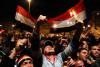
Egyptian officials announced on May 15 the conviction and prison sentences of over one hundred demonstrators who were peacefully assembling without a permit. Fifty one individuals were sentenced to two years in prison while another hundred and one individuals were sentenced to five years in prison. The sentences were handed down in connection with the April demonstrations to protest Red Sea islands being turned over to Saudia Arabia. Many believed the islands were apart of an economic deal, and opposed against the government decision, leading to the charges of joining terrorist groups and disturbing the peace. The demonstrations were broken up by police officers who used tear-gas. The courts are permitting the convicted to appeal, as there is a dispute about the evidence and a claim that innocent bystanders were arrested in the disturbance.
Turkish authorities block opposition party congress
Turkish police on May 15 prevented members of the Nationalist Movement Party (MHP) from holding a party congress in direct opposition to President Recep Tayyip Erdogan, by sealing off a hosting hotel. Police put up barricades to prevent party members from gaining access to the hotel where they had planned to hold a congress to challenge the growing power of Erdogan. Dissident party members previously sought judicial measures to force an extraordinary session, but the courts have failed to decide if the dissidents have a legal right to hold the congress. The MHP dissidents were attempting to gain enough signatures to force the extraordinary congress, after party losses in the November 2015 election.
Turkey refuses to modify anti-terrorism law
Turkish President Recep Tayyip Erdoğan announced May 6 that he does not plan to change the country's anti-terrorism law, a requirement of a deal struck between Turkey and the EU in March. Erdoğan made the announcement after Prime Minister Ahmet Davutoglu, who was the key figure in achieving this deal, announced he would step down. EU leaders agreed to the deal with Turkey to stem migrant flows to Europe, particularly of Syrian refugees, in return for financial and political incentive to Ankara. One of the benefits for Turkey was visa-free travel for Turks, but a change in the anti-terrorism law is one requirement that Turkey is required to complete before the EU makes that determination. Erdoğan had previously told EU leaders that if all promises were not fulfilled, Turkey would not continue its responsibilities to receive migrants under the deal. Experts have expressed concern that the EU-Turkey deal may fall apart if Turkey does not agree to changes in the anti-terrorism law.
El Salvador deploys new anti-gang 'reaction force'
El Salvador has deployed a new special unit to fight criminal gangs that are now said to be operating not only in the cities but in rural areas throughout the country. The 1,000-strong Specialized Rapid Reaction Force is equipped with helicopters, armored cars and assault weapons. A mixed unit of 600 military troops and 400 National Civil Police agents, it is charged with "pursuing and neutralizing" the gangs, which are said to have 70,000 members in the country. At an April 20 ceremony to unveil the new force, Vice President Oscar Ortiz said: "The moment has come to stop the scale of violence which has imposed itself in the last few years on our country, and which has created so much blood and sacrifice... We are going to go after them in the countryside and in the city." He added that human rights will be respected. National Civil Police director Howard Cotto pledged the new force will "disarticulate the command structure" of the gangs. (BBC News, Reuters, La Prensa, Honduras, April 20)







Recent Updates
1 day 23 hours ago
2 days 18 hours ago
3 days 2 hours ago
3 days 16 hours ago
3 days 16 hours ago
1 week 6 days ago
2 weeks 20 hours ago
2 weeks 2 days ago
2 weeks 2 days ago
2 weeks 2 days ago