



police state
Israel: protest vigil for detained Palestinian MK
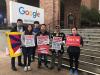
Dozens of activists on Dec. 26 demonstrated outside the Israeli magistrate court in the central city of Rishon Lezion in support of a Palestinian member of the Knesset, Basal Ghattas, after the court extended his detention another day. Ghattas, a member of Joint List which represents parties led by Palestinian citizens of Israel in the Knesset, was arrested on suspicions of smuggling cellphones to "Palestinian terrorists" serving time in Israeli prisons, and is being charged with "conspiring to commit...violations of Israel Prisons Service orders." Protesters raised photos of Ghattas and posters criticizing the Israeli government in both Hebrew and Arabic. Palestinian members of Knesset Haneen Zoabi and Jamal Zahaika attended the protest before they entered the court hall to attend the hearing.
Poland's victory: can it happen in US?
Poland's increasingly authoritarian government capitulated after days of angry protests and agreed to scrap a proposed law that would have imposed harsh restrictions on the media. The announcement came after thousands marched on the presidential palace Dec. 18, chanting "freedom, equality, democracy." President Andrzej Duda admitted the legislation was too controversial, and tellingly made his announcement after consulting with Jarosław Kaczyński, chairman of his right-populist Law & Justice Party (PiS). Protests even penetrated the parliament chamber Dec. 19, when opposition MPs blockaded the entrance, forcing PiS MPs into another room to vote on next year's budget. The law, which would have placed restrictions on media access in parliament, is part of a growing centralization of power by the PiS government since it came to power in October 2015. The EU this week issued a formal protest of moves to restrict the independence of the judiciary. But this is not the first victory over the PiS regime. In October, the party withdrew plans for a total abortion ban after huge numbers of women dressed in black protested across the country. (The Guardian, Dec. 21; The Guardian, Dec. 19; BBC News, Dec. 18; The News, Poland, Dec. 16)
Turkish government silencing media: HRW
The Turkish government has been silencing the media on a massive scale to prevent scrutiny or criticism of the government's "ruthless crackdown" on its enemies, Human Rights Watch (HRW) said in a report Dec. 15. The report was based on interviews with journalists, editors, lawyers, and press freedom activists, and a review of court documents relating to the prosecution and imprisonment of journalists. According to HRW, since the failed coup in July, the attack on critical journalism has "accelerated...denying Turkey's population access to a regular flow of independent information from domestic newspapers, radio, and television stations about developments in the country." The report stated that Turkey was abusing the criminal justice system to prosecute and imprison journalists on false charges of terrorism, insulting of public officials and crimes against the state. HRW also documented physical attacks on journalists, interference with journalistic independence, government takeover or shutdown of private media companies and critical television stations.
Duterte threatens to kill human rights activists
Already accused of carrying out 3,000 extrajudicial executions in his anti-drug crackdown since taking office in June, the Philippines' ultra-hardline President Rodrigo Duterte has now threatened to kill human rights activists who have the temerity to complain about it. In a speech at Manila's Malacañang Palace on Nov. 28, Duterte said those who accuse him of ordering the summary execution of drug users and low-level dealers should be blamed if the country's drug problem worsened—and suffer the same fate. Here's the quote, translated from Filipino: "The human rights [activists] said I ordered the killings. I told them 'OK. Let's stop. We'll let them [drug users] multiply so that when it's harvest time, more people will die. I will include you because you are the reason why their numbers swell."
UK to ban neo-Nazi group under terror laws
The UK government said Dec. 12 it will use its terrorism laws to ban a neo-Nazi group, marking the first time such a step has been taken. The move would make it a crime to be a member of, wear insignia, or work with the National Action, as it would fall under the umbrella of a terrorist organization. While the group rose to prominence for its anti-Semitic and xenophobic stances, they recently began to encourage their members to use violence. The terrorism act provision is being used because the group used their now deleted social media to encourage lone wolf acts and showed members training for battle. Additionally, the group praised the murder of progressive MP Jo Cox and adopted her accused killer's court statement as its official slogan. ("Death to traitors, freedom for Britain.") The measure to ban the group is subject to Parliamentary approval.
China: investigate disappearance of rights lawyer
A group of UN human rights experts called on the Chinese government Dec. 6 to investigate the disappearance of a prominent human rights lawyer. Jiang Tianyong has been missing since Nov. 21, after he visited the family of another human rights lawyer who has been detained since a "crackdown" on political dissidents last summer. UN experts are concerned that Jiang has been detained, possibly while traveling on a train bound for Beijing following his visit with the detained lawyer's family in Changsha. In February 2011 Jiang was detained for two months by Chinese authorities, during which he claims to have been beaten and tortured. Human rights activists claim that the crackdown in China is part of a larger effort to silence political dissidents. Jiang rose to prominence for his involvement in high profile cases, defending human rights activists, legal activists, HIV/AIDS sufferers, Tibetan protesters and other vulnerable groups.
Egypt: top court upholds law restricting protests
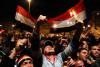
Egypt's Supreme Constitutional Court on Dec. 3 upheld a law that effectively bans protests. The law requires individuals seeking to protest to inform the interior ministry, at least three days prior, of any public gathering with more than 10 people, allows security forces to break up unapproved protests with water cannons, tear gas, and birdshot, and imposes up to five years of jail time for violation of various protest restrictions. The lawsuit had contended the law violated Article 73 of the Constitution, which provides for the "right to organize public meetings, marches, demonstrations and all forms of peaceful protest while not carrying weapons of any type, upon providing notifications as regulated by law." Despite upholding the law generally, the court did find unconstitutional a provision that allows the interior ministry to deny protest requests. In response to the ruling, human rights lawyer Gamal Eid said, "There isn't a court in Egypt that has mercy on the people."
Dakota Access pipeline blocked —for now
The US Army Corps of Engineers on Dec. 4 issued a statement saying that Dakota Access LLC will not be granted the last remaining easement it needs to drill under the Missouri River at Lake Oahe and complete construction of the Dakota Access Pipeline. The statement considers the possibility that the Army Corps will conduct a limited Environmental Impact Statement (EIS) on the river crossing and explore possibilities for alternative routes. The decision comes as after weeks of protests at the crossing site, and as thousands of veterans are arriving from across the country to stand with the self-declared "water protectors" who face escalating repression at the hands of law enforcement.








Recent Updates
1 day 22 hours ago
2 days 17 hours ago
3 days 1 hour ago
3 days 15 hours ago
3 days 15 hours ago
1 week 6 days ago
2 weeks 19 hours ago
2 weeks 2 days ago
2 weeks 2 days ago
2 weeks 2 days ago