




Yemen
Obama's sixth year: a World War 4 Report scorecard
World War 4 Report has been keeping a dispassionate record of Barack Obama's moves in dismantling, continuing and escalating (he has done all three) the oppressive apparatus of the Global War on Terrorism (GWOT) established by the Bush White House. On the day of his 2015 State of the Union address, we offer the following annotated assessment of which moves over the past year have been on balance positive, neutral and negative, and arrive at an overall score:
Jihadis declare open season on school children
At least 141, including 132 children, were killed in an attack by Tehreek-e-Taliban Pakistan (TTP) militants on an army-run school in Peshawar Dec. 16. Almost 250 are reported wounded in the assault on the Army Public School and College, many of them very seriously. The six attackers, all wearing suicide vests, are said to be dead. The students at the school are the children of army soliders, and the TTP said in a statement the attack "in retaliation against" the military’s ongoing Operation Zarb-e-Azb agianst Taliban strongholds in North Waziristan. A TTP spokesman told reporters by phone: "Our suicide bombers have entered the school, they have instructions not to harm the children, but to target the army personnel." But the gunmen went from room to room shooting every student they found, most of them in the head. Even Afghanistan's Taliban issued a statement decrying the attack as "un-Islamic." Pakistan's military immediately retaliated with air-strikes on presumed TTP targets in Khyber Agency. (Al Jazeera, AP, BBC News, AJC, Dawn, Pakistan, Dec. 17)
Yemen: Saudis suspend aid as Houthi power grows
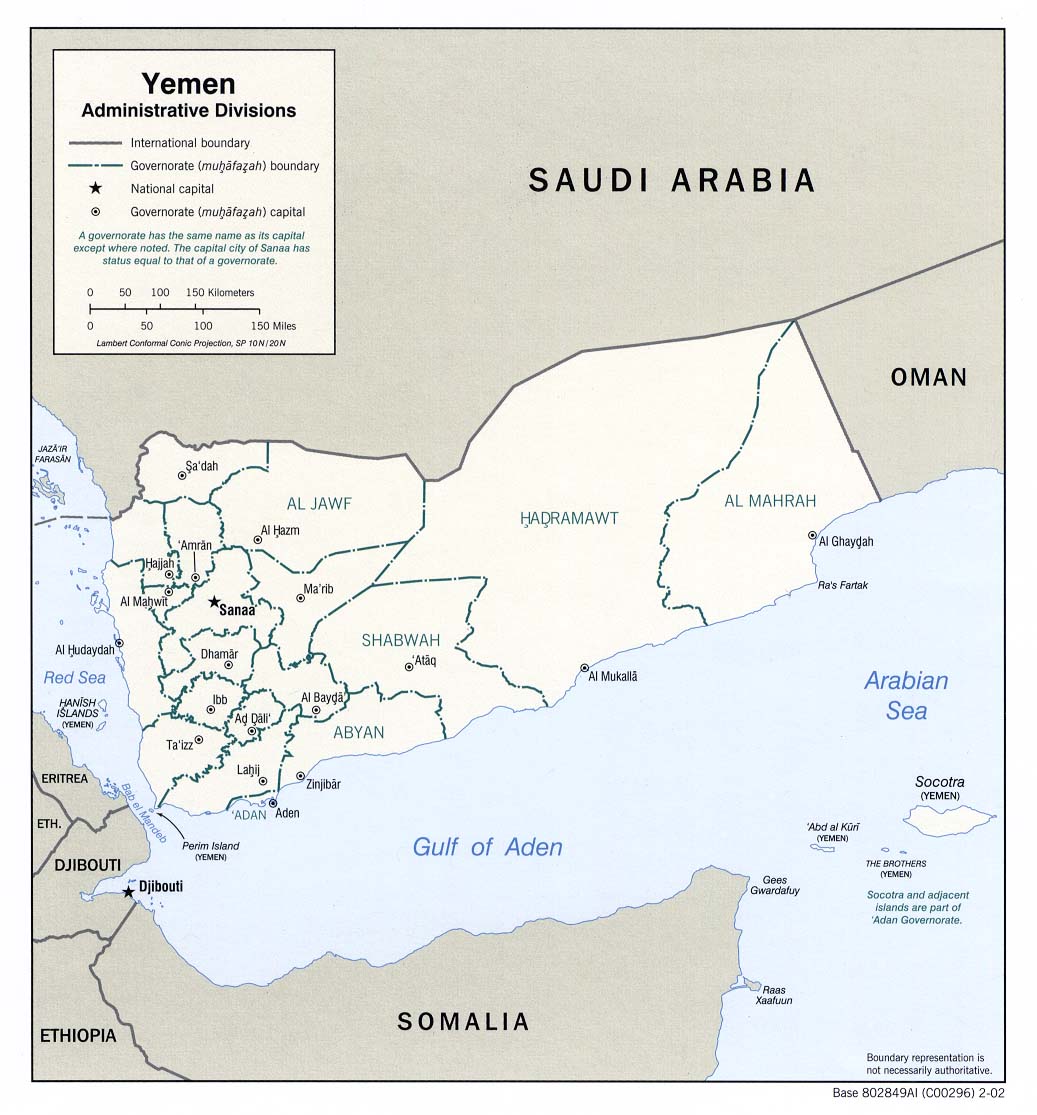
SEAL Team 6 commandos raided a village near Wadi Abdan in Yemen's southern Shabwa governorate (see map) early Dec. 6, in an effort to rescue a US photojournalist held hostage by al-Qaeda in the Arabian Peninsula (AQAP), but the captors killed the journalist and a South African held with him. (NYT, BBC News, The Telegraph, Dec. 6) The failed raid came days after it was reported that Saudi Arabia suspended aid to Yemen in response to the growing power of the Shi'ite Houthi rebels. Although word is just breaking now, the aid was apparently cut off after Houthi fighters took over the capital Sanaa in September. (Al Jazeera America, Dec. 4) While the rebels have ostensibly withdrawn from Sanaa under a peace deal, they continue to expand their control of several key points around the city, on Dec. 6 seizing control of the Yemeni military academy. The Defense Ministry has broached incorporating the Houthi fighters into the national army. (DPA, Dec. 6)
Saudis crack down on Yemeni smuggling pipeline
Border Guard patrols along Saudi Arabia's rugged mountain frontier with Yemen report mounting interceptions of hashish, weapons and other contraband. Over the past nine months, interceptions at the Najran border post alone netted four tons of hashish, as well as explosives, hand grenades, firearms and ammunition. Some 250 smugglers and 25,000 "infiltrators" were also detained at the post, and several vehicles impounded. But Border Guard officials admit that on several occassions the smugglers got away into the wilderness, with agents firing after them. At the Wadi post, to the east of Najran, border guards last month confronted six "infiltrators," killing five and capturing the survivor. Four tons of hashish were confiscated along the border just during the holy month of Ramadan, which ended with the Eid al-Fitr festival July 28—possibly because smugglers thought patrols would be slacking off. On the contrary, Saudi forces beefed up patrols.
Judge dismisses Yemen drone strike lawsuit
A judge for the US District Court for the District of Columbia dismissed a lawsuit (PDF) on April 4 brought against officials of the Obama administration for the 2011 drone strikes that killed three US citizens in Yemen. The lawsuit was specifically brought against former defense secretary Leon Panetta, former CIA director David Petraeus and two commanders in Special Operations forces. Judge Rosemary Colleyer found that there were serious constitutional issues in the case but that "this case would impermissibly draw the court into 'the heart of executive and military planning and deliberation.'" Three US-born alleged al-Qaeda leaders and propagandists, Anwar al-Awlaki, his son Abdulrahman al-Awlaki, and Samir Khan, were killed by the drone strikes in 2011. The elder al-Awlaki has been linked to several attacks on the US, including an attempt on Christmas Day 2009 on a Detroit-bound airplane.
Yemen: autonomy or separatism?
A presidential panel in Yemen on Feb. 10 released a plan to transform the country into a "federal state of six regions" as part of its US-brokered political transition. Interim President Abd-Rabbu Mansour Hadi convened the panel last month, at the end of a "national dialogue" on new territorial divisions to be incorporated into a new constitution this year. The former North Yemen is to be broken up into the regions of Azal, Saba, Janad and Tahama; the former South Yemen into Aden and Hadramout. The capital city of Sanaa is to have "a special status in the Constitution to guarantee its independence and impartiality," said a report in the state news agency. The port city of Aden, the former capital of South Yemen, would also have "independent legislative and executive powers."
Yemen: war comes to capital
Yemen's ongoing internal war briefly made world news Dec. 5 as a suicide bomber and gunmen wearing army uniforms attacked the defense ministry building in the capital, Sanaa, killing 52 people. One attacker drove a car packed with explosives into the gate of the ministry's compound, then gunmen in another vehicle sped in and opened fire on soldiers and medical staff working at a hospital within the compound. Seven foreign doctors and nurses—from Germany, India, Veitnam and the Philippines—are among the dead. No group immediately claimed responsibility, but authorities of course suspect al-Qaeda in the Arabian Peninsula. The attack came as Defense Minister Mohammed Nasser is on a visit to Washington. (Reuters, BBC News, Dec. 5)
Syria war portends Middle East 'balkanization'?
Robin Wright, author of Rock the Casbah: Rage and Rebellion Across the Islamic World (and a "distinguished scholar" at the United States Institute of Peace and the Wilson Center) has an op-ed in the New York Times Sept. 28, ingenuously entitled "Imagining a Remapped Middle East"—as if nobody ever has. Wright sees a portending breakdown of Syria into smaller entities—the oft-discussed Alawite mini-state on the coast and the inevitable Kurdish enclave in the north. But Wright predicts the separatist contagion spreading from Syria to the rest of the Middle East—using some of the most clichéd names imaginable, e.g. Iraq breaking into "Sunnistan" and "Shiitestan." (Note to "distinguished scholar" Wright: the "stan" suffix is of Persian origin, and very unlikely to be taken up by Arabs, of whatever sectarian affiliation.)










Recent Updates
6 days 13 hours ago
1 week 8 hours ago
1 week 16 hours ago
1 week 1 day ago
1 week 1 day ago
2 weeks 4 days ago
2 weeks 5 days ago
2 weeks 6 days ago
3 weeks 8 hours ago
3 weeks 8 hours ago