


WW4 Report
Egypt: Tahrir Square occupied again
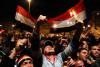
Street clashes between supporters and opponents of President Mohamed Morsi shook Egypt's port of Alexandria June 28, in a day of rival protests nationwide that left two dead—including a US citizen who was photographing. Several Muslim Brotherhood offices were ransacked and some torched across the country, including the offices in Alexandria and the Nile Delta governorates of Beheira, Gharbiya, Daqahilyah and Kafr Al-Sheikh. The Brotherhood released a statement holding members of the anti-Morsi Tamarod ("Rebel") campaign responsible for the violence, slamming them as "thugs." Cairo's Tahrir Square was again occupied, as thousands marched on the iconic plaza to demand Morsi's ouster.
Peru: peasant leader killed in Cajamarca
A campesino leader in Peru's Cajamarca region, the scene of ongoing protests over mining operations, was assassinated June 26. Carlos Vásquez Becerra, vice president of the Provincial Federation of Rondas Campesinas (peasant self-defense patrols) was found beaten to death in Chiramayo Canyon in his native Santa Cruz province. The day before, he had led a meeting of comuneros in nearby Ninabamba district to plan protests against the operations of La Zanja mining company. The National Unitary Center of Rondas Campesinas of Peru (CUNARC) is demanding an investigation. (Caballero Verde, La Nueva Prensa, Cajamarca, RPP, June 26) One campeisno was killed in protests over La Zanja's local operations in 2004.
Brazil: 10 dead as police raid favela
At least 10 people were killed June 25 when elite troops from the Special Operations Battalion (BOPE) of Brazil's Military Police raided the Nova Holanda favela in Rio de Janeiro's sprawling northern district Complexo da Maré. Authorities said the deaths occurred following a gun battle between police and criminals taking advantage of protests sweeping through the city to loot and steal. One police officer was reportedly among the dead. Protests continue throughout the city; on the day of the clash, hundreds blocked streets for several hours in the outlying districts of Capao Redondo and Campo Limpo. The following day, violence exploded as some 100,000 marched in Belo Horizonte, where Brazil played Uruguay in Confederations Cup semi-finals. Stores were looted, vehicles burned, and one protester killed when he fell from an overpass. (Zero Hora, AP, June 27; Al Jazeera, June 26; Correio do Brasil, June 25)
Mali: will peace hold with Tuareg rebels?
A Malian government mission arrived June 23 in Kidal, stronghold of the separatist National Movement for the Liberation of Azawad (MNLA), days after the signing of a ceasefire deal with the mediation of the West African bloc ECOWAS. The mission is charged with establishing conditions for the return of Malian defense and security forces on this part of the national territory in conformity with the peace agreement signed June 18 in Burkina Faso's capital Ouagadougou between the Mali's government and Tuareg separatists including the MNLA and the High Council for Azawad Unity (HCUA). The peace deal allows for the presidential elections set for July 28 to move ahead in the northern region. (Xinhua, June 24; AFP, Nationalia, June 19)
Bulgaria protesters say 'NOligarchy!'
Over the past 10 days, thousands of protesters have repeatedly taken to the streets of Bulgaria to oppose the Socialist-led coalition government of Prime Minister Plamen Oresharski, which is accused of corruption. A popular slogan is "NOresharski! NOligarchy!" While a generalized anger at the country's political elite animates the protests, the spark that set them off was Oresharski's appointment of MP Delyan Peevski as director of the State Agency for National Security (SANS). Peevski is a leader of the Movement for Rights and Freedoms (MRF), which advocates for Muslims and ethnic Turks in Bulgaria—pointing to a xenophobic element in the protest movement. Bulgaria's parliament revoked the appointment of Peevski, but protesters continue to call for the government's resignation.
Colombia: two dead in eradication protests
Following two weeks of escalating protests by local campesinos, two were killed as National Police troops opened fire June 23 at Ocaña in Colombia's Norte de Santander department. There were reports of injuries on both sides in similar clashes in recent days. At least 10,000 from the Catatumbo Valley have joined the protests that erupted on June 10, demanding the government declare the area an autonomous "campesino reserve zone," and halt the eradication of coca crops. Protesters claim that cocaleros have not been offered alternatives to provide for their families. Juan Carlos Quintero, vice president of the Catatumbo Campesino Association, said "we directly blame President Juan Manuel Santos" in the deaths, accusing him of having ordered the repression. Authorities said that protesters had set fire to the municipal building and the local prosecuter's office in Tibu, and also charged the FARC is involved in the campaign. The FARC, whose leader "Timochenko" is believed to be operating from the Catatumbo area, issued a statement calling on authorities to lower the level of violence. (Colombia Reports, AP, June 23)
Peru: student protests rock Cuzco
Riot police clashed with student protesters in Cuzco, Peru, June 14, using tear-gas against demonstrators who hurled stones. Students at the city's University of San Antonio Abad (UNSAAC) walked out the day before to protest a proposed education law they say violates the autonomy of universities and is a step towards privatization of the national university system. The University Law is currently under debate in Peru's Congress. Some 20 students were injured in the clashes, and 11 arrested. Police said two officers and a local prosecutor also suffered injuries. (Vision, June 17; La Republica, June 14)
China: Uighurs imprisoned for online 'extremism'
Courts in China's far western Xinjiang province on June 20 sentenced 11 ethnic Uighurs to up to six years in prison for promoting extremism. Eight of those convicted came from the old Silk Road city of Kashgar, the Justice Ministry's official newspaper Legal Daily. Although the report did not mention ethnicity, all had Uighur names. In one case, the suspect visited "illegal" websites to download material that "whipped up religious fervor," "preached 'holy war'" and "whipped up ethnic enmity." Another eight received terms of up to 13 years for such crimes as "organizing a terrorist organization."






Recent Updates
7 hours 26 min ago
9 hours 13 min ago
4 days 22 hours ago
4 days 23 hours ago
4 days 23 hours ago
4 days 23 hours ago
4 days 23 hours ago
4 days 23 hours ago
4 days 23 hours ago
4 days 23 hours ago