



control of oil
Syria war portends Middle East 'balkanization'?
Robin Wright, author of Rock the Casbah: Rage and Rebellion Across the Islamic World (and a "distinguished scholar" at the United States Institute of Peace and the Wilson Center) has an op-ed in the New York Times Sept. 28, ingenuously entitled "Imagining a Remapped Middle East"—as if nobody ever has. Wright sees a portending breakdown of Syria into smaller entities—the oft-discussed Alawite mini-state on the coast and the inevitable Kurdish enclave in the north. But Wright predicts the separatist contagion spreading from Syria to the rest of the Middle East—using some of the most clichéd names imaginable, e.g. Iraq breaking into "Sunnistan" and "Shiitestan." (Note to "distinguished scholar" Wright: the "stan" suffix is of Persian origin, and very unlikely to be taken up by Arabs, of whatever sectarian affiliation.)
Syria: what is the imperial agenda?
President Obama's speech to the United Nations on Sept. 24 displayed refreshing honesty: "The United States of America is prepared to use all elements of our power, including military force, to secure our core interests in the [Middle East] region... We will ensure the free flow of energy from the region to the world. Although America is steadily reducing our own dependence on imported oil, the world still depends upon the region's energy supply, and a severe disruption could destabilize the entire global economy." (American Forces Press Service, The Hill, Sept. 24) Although Syria was not the explicit context here, the speech also called the use of chemical weapons n Syria, "a threat to our own national security."
Arab Revolution hits Sudan
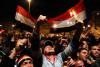
Street clashes continued in the Sudanese capital Khartoum for a second day Sept. 26 after massive protests broke out over the regime's move to cut fuel subsidies. At least 30 have been killed, and protestors have taken up the slogans of the Arab Revolutions, "Freedom, Freedom!" and "The people want the fall of the regime!" The regime has suspended Internet access for 48 hours in a bid to head off new demonstrations that have been called for after Friday prayers. Authorities say that police are among the dead, and that armed militants from the Sudan Revolutionary Front (SRF) are infiltrating and inciting the protests. Opposition figures, in turn, accuse agents of the National Intelligence and Security Services (NISS) of being behind arson attacks on government buildings and public buses. (Sudan Tribune, Sept. 26; BBC News, Sept. 25)
Brazil: documents expose US industrial espionage
On Sept. 8 the "Fantástico" news program on Brazil's Rede Globo television network presented documents indicating that the US National Security Agency (NSA) had spied on Brazil's giant semi-public energy company, Petrobras (Petróleo Brasileiro S.A.). The allegations came one week after the same program presented evidence that the NSA had spied on Brazilian president Dilma Rousseff and Mexican president Enrique Peña Nieto. As in the earlier news program, the spying claims were based on documents given to Glenn Greenwald, a US blogger and columnist for the UK daily The Guardian who lives in Brazil, by former US intelligence technician Edward Snowden.
Did climate change spark Syria crisis?
We've noted before that numerous experts have linked the Darfur conflict to climate change, but now a less obvious climate connection to the Syria crisis is persuasively argued by Peter Sinclair of the blog Climate Denial Crock of the Week. As the name suggests, it is generally dedicated to shooting down climate change denialism, but in this Sept. 5 entry he attempts to trace the Syrian explosion—indeed, the entire Arab Revolution—to an atmospheric phenomenon. Sinclair reminds us that in the summer before the wave of revolution swept through Tunisia, Egypt, Libya, Yemen, Bahrain, Syria and beyond, Russia experienced a "1,000-year heat wave" (Bloomberg, Aug. 9, 2010) that shrivelled its crops and prompted Moscow to halt wheat exports (Washington Post, Aug. 6, 2010).
Mexico: thousands march against 'energy reform'
In the first street demonstration that former center-left presidential candidate Cuauhtémoc Cárdenas Solórzano has led since 2000, thousands of Mexicans marched in Mexico City on Aug. 31 to show their opposition to President Enrique Peña Nieto's plan for opening up the state-owned oil and electric companies, Petróleos Mexicanos (Pemex) and the Federal Energy Commission (CFE), to greater participation by foreign and Mexican private companies. The marchers set off from the Angel of Independence, a traditional starting point for Mexico City demonstrations, but they stopped short of the usual destination, the Zócalo plaza, which dissident teachers are occupying as part of a series of protests that have tied up various parts of the capital since Aug. 21. The education workers are protesting President Peña’s plans for teacher evaluations.
Colombia: students, workers join peasant strike
Tens of thousands took to the streets across Colombia last week, as workers and students joined the strike launched by campesinos in the north of the country. Violent clashes were reported Aug. 29, primarily from Bogotá, where police fired tear gas into a crowd of some 10,000 assembled in the city's main square, Plaza Bolívar. Witnesses report that despite a strong police presence, the demonstrators remained calm for several hours, with speakers encouraging peaceful protest—until a group arrived (possibly agents provocateurs) who began throwing firecrackers and debris at the police line, sparking the melee. Within 15 minutes, the square had been cleared, though clashes with the ESMAD riot squad continued in the streets surrounding the plaza. Some 20 were injured in the street fighting. Riots were also reported in Soacha, a working-class city on the outskirts of Bogotá, where dozens of masked men clashed with riot police, prompting local authorities to order a curfew.
'Anti-war' movement still betraying Syrian people
We noted over a year ago that the increasingly poorly named "anti-war" movement (more of a gaggle than a "movement," and highly selective in being "anti-war") was betraying the Syrian people by failing to even acknowledge Bashar Assad's atrocities, and portraying the opposition as all CIA pawns or al-Qaeda jihadists or both. Now that Assad is apparently escalating to genocide and the US threatens air-strikes, is there any sign that the "anti-war" forces have been chastised into a more honest appraisal? Sadly, no.









Recent Updates
2 days 21 hours ago
2 days 22 hours ago
2 weeks 4 hours ago
2 weeks 23 hours ago
2 weeks 1 day ago
2 weeks 1 day ago
2 weeks 1 day ago
3 weeks 4 days ago
3 weeks 6 days ago
4 weeks 7 hours ago