


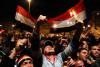


Danish veterans stage silent protest at US embassy
Hundreds of Danish veterans and supporters staged a silent march on Jan. 31 from the historic Kastellet fortress to the US Embassy in Copenhagen as part of a "No Words" mobilization to protest recent US rhetoric that organizers said demeans Denmark's combat contributions alongside American forces.
Organizers also linked the march to the status of Greenland, upholding the right of self-determination for the Danish island territory. Recent demands by President Donald Trump for US annexation of Greenland, and comments seeming to question the courage of Danish soldiers, have stirred a sense of betrayal for many in Denmark, particularly those who fought alongside US troops in Iraq and Afghanistan.
The march gathered at the Monumentet for Danmarks Faldne (Monument to Denmark's Fallen) inside Kastellet, began with one minute of silence before departure, and concluded with five minutes of silence at the embassy. Organizers advised attendees to wear their service medals and stated that flags and banners were welcome.
In published remarks, organizers stated that 52 Danish flags bearing the names of Danes killed in US-led post-9-11 operations would be planted in front of the embassy following the march. Participants then faced the embassy in silence to honor the fallen.
In an English-language address prepared for delivery outside the embassy, organizers recalled how Denmark "immediately" joined the international response after the invocation of NATO Article 5 following the World Trade Center attacks. Over 27,000 Danish soldiers served in US- and NATO-led operations in Afghanistan and Iraq, with over 200 wounded and 52 killed. Denmark's Armed Forces separately noted that 44 Danish soldiers died in Afghanistan while serving in NATO-led missions.
Greenland is governed under Denmark's 2009 Act on Greenland Self-Government, which recognizes Greenland native inhabitants as a "people" under international law, with a right to self-determination, and sets out procedures for any future change in status. The march invoked core international law constraints, including the UN Charter prohibition on threats or use of force against the territorial integrity or political independence of states, and the centrality of self-determination to the international system.
In a Jan. 14 statement, UN experts urged the US to respect international law and Greenland's right to self-determination, warning that rhetoric suggesting plans to "take" or control the territory undermines the UN Charter and international order. Protesters similarly accused the US of failing to respect alliances and the rule of law, emphasizing Denmark's sacrifices in post-9-11 coalition missions and Greenlanders' right to determine their political future.
Denmark and Greenland leaders have adamantly rejected US designs on the territory following the US appointment of a special envoy to Greenland in December. Last month, President Trump threatened tariffs on EU and Nordic countries that do not support his efforts to annex Greenland, but has since walked back his threat.
From JURIST, Feb. 2. Used with permission. Internal links added.









Trump casts shadow over Arctic conference
European leaders reaffirmed their support for Greenland at a conference in Tromsø, northern Norway, as they welcomed a reduction in tensions with the United States. President Trump has repeatedly threatened to annex the autonomous region of Denmark, sparking a political crisis that risked splitting the transatlantic alliance. European leaders have rallied around Greenland's right to self-determination and increased their funding to the territory. In Tromsø, Greenland's foreign minister, Vivian Motzfeld, called for "respect for the fundamental principles of international humanitarian law, territorial integrity, [and] democracy."
However, the concerted efforts by European leaders to cool relations with the US and turn the security focus back towards Russia were bluntly undermined by outspoken Greenlandic MP Aaja Chemnitz. She told journalists: "Right now, the biggest threat [to Greenland] is from the United States, not China, not Russia." While a diplomatic process has been established to work on Greenland-US relations, many believe US interest in annexing the territory remains. (TNH)