



Kurdistan
Turkish troops in Kobani incursion
Hundreds of Turkish troops in armored vehicles crossed into northern Syria Feb. 22—apparently to evacuate forces guarding an historic tomb, demolishing it, and moving the remains to a different site. The remains of Suleyman Shah were moved to a location in Syria closer to the border, and a Turkish flag raised at the new burial site near Esmesi (Aleppo governorate). Turkey considers the site sovereign territory, so it is unclear if it has now abandoned claims to the previous site and transfered them to the new one. The Damascus regime (which has long since lost control over the north) condemned the incursion as "flagrant aggression," saying Turkey had informed its Istanbul consulate of the operation but not waited for Syria's consent. Turkish President Recep Tayyip Erdogan said his armed forces had carried out a "successful operation which is beyond all kinds of appreciation." Ominously, the column of Turkish armor swept through the border city of Kobani on its way to the site—an unsubtle message to the autonomist Kurdish fighters there. (BBC News)
ISIS and the neocons: fearful symmetry?
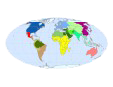
Daniel Neep of Georgetown University in Discover Society last month provided a refreshingly skeptical overview of the various plans for redrawing the boundaries of the Middle East, in a piece entitled "The Middle East, Hallucination, and the Cartographic Imagination." We call it the balkanization agenda of the most hubristic neo-conservatives, although Neep doesn't use those terms ("DC policymakers," he says). He discusses how these ideas have been broached by imperial officialdom, e.g. in Lt. Col. Ralph Peters' writings in the Armed Forces Journal, and Wilson Center wonk Robin Wright in the New York Times. Neep's piece is most interesting for its comparative maps of all the schemes that have been floated. They all pretty much amount to the same thing: Iraq and Syria divided into Sunni and Shi'ite zones, an independent Kurdistan, Hijaz breaking off from Saudi Arabia, and so on. The irony is that all these theorists blabber on about how the 1916 Sykes-Picot Agreement created "artificial states," while the drawing of new maps by Beltway wonks merely replicates the hubris of Sykes-Picot!
Kurdish forces advance towards ISIS capital
Syrian Kurdish forces, backed by US air-strikes, advanced Feb. 19 into Raqqa governorate, where ISIS has its de facto capital at the provincial seat. The Syrian Observatory for Human Rights said the Kurdish YPG forces and allied FSA units captured 19 villages in Raqqa. "The US-led international coalition played a key role in the advance, bombing the IS positions and forcing its fighters to withdraw," said Observatory director Rami Abdel Rahman. Since driving ISIS fom Kobani (Aleppo governorate) last month, Kurdish and allied forces have captured some 242 villages from ISIS, including the 19 in Raqqa. Among the contested areas is the border town of Tal Abyad. The YPG charges that ISIS forces at Tal Abyad cross into Turkey, where they have established a staging territory. (AFP-JIJI, Feb. 20)
Kurdish forces drive ISIS back from Kobani
Kurdish forces continue to drive ISIS militants back in the Kobani area and have retaken more than 100 villages from the jihadists since pushing the last of them out of the urban center following a 130-day siege two weeks ago. Fighters of the Peoples Protection Units (YPG). supported by Peshmerga and Free Syrian Army forces and US-led air-strikes, have now reached the village of Karamox, 20 kilometers east of Kobani. Kurdish forces claim gains against ISIS in every direction. Among key villages retaken from ISIS, which had held them since September, are Kofi, 25 kilometers south of Kobani, and Rovi, a stop on the road linking Kobani with Aleppo. On the western front, the Kurdish forces are now positioned at Karako village, 20 kilometers from Kobani's urban center.
ISIS and atrocity pornography: politics of horror
The new ISIS propaganda video showing the immolation of a captive Jordanian pilot is very professionally done, its special creepy quality coming from the mix of slick production and utterly barbaric content. Before the big climax, we are shown several images of mangled children, purported to be victims of bombardment by the US-led coalition. Each image is engulfed by photo-shopped flames, symbolizing the explosions that left them dead or maimed. Then the eerily ritualistic finale, in which the pilot stands erect in an orange jump-suit, inside a metal cage in a bombed-out site, surrounded by an impassive phalanx of masked thugs with machine-guns. One thug approaches with a torch, and it becomes clear the captive has been drenched with gasoline. His body is quickly engulfed by real flame, and the camera lovingly details his agonizing death. The implication is that this is just retribution for the lives claimed by the air-strikes. Fox News is one of the few media outlets to display the full video (with the warning: "EXTREMELY GRAPHIC VIDEO"). Fox only wants to make the point that ISIS is a barbaric enemy (as if we didn't know), but there are other points to be made here too...
ISIS burns cannabis, snorts coke?
We recently noted that the ultra-puritanical ISIS has been burning the cannabis fields in the territory it controls in northern Syria—and that the cannabis farmers of Lebanon are arming to resist any ISIS incursion across the border. Now comes the hilariously predictable news that ISIS fighters may be snorting cocaine to keep their spirits up! On Jan. 6, the Kurdish Daily News posted a video from the town of Kobani in northern Syria, where local Kurdish fighters have been resisting an ISIS siege since September. The footage shows Kurdish fighters holding a stash of white powder in a big plastic bag just taken from the house of an ISIS commander. Kurdish fighters interviewed on camera said the house had been seized from an ISIS "emir" (as they call their commanders) who had earlier taken it over from local residents. The"emir" was killed in house-to-house fighting, and his home searched. In addittion to lots of weapons (of course), the coke stash was found. The Kurdish fighters said they believed the emir was distributing coke to his own followers to fuel their fighting spirit.
Kurdish forces claim victory at Kobani
Kurdish forces at Kobani announced Jan. 26 that the town is now under their full control, with ISIS militants driven out of all neighborhoods. Joint forces of the People's Protection Units (YPG) and Peshmerga said ISIS remains in control only in a small village on the outskirts, which is expected to fall soon. Syria's Kurdish Democratic Union Party (PYD) announced on Twitter that "the city of Kobane is fully liberated." YPG's posted to Twitter a photo of their fighters raising a flag on a liberated hilltop. The claim was also confirmed by the US military. "Anti-ISIL forces now control approximately 90 percent" of Kobani, Central Command said. The CentCom statement congratulated the town's "courageous fighters" for their "resilience and fortitude" and having denied ISIS "one of their strategic objectives."
Kurdish forces open new front against Assad
Fighting broke out between Kurdish forces and Syrian government troops in the northeastern city of Hassakeh, the UK-based Syrian Observatory for Human Rights said Jan. 18. The clashes reportedly began after Kurdish fighters of the People's Protection Units (YPG) detained around 10 regime loyalists they accused of seizing part of a demilitarized zone. Under a deal made last year, YPG forces control around 30% of the city, with regime forces controlling most of the city's Arab-majority neighborhoods, and a buffer zone off-limits to both sides. The deal was arranged as both sides fought to keep ISIS out of Hassakeh, a provincial capital of some 200,000 people. The new fighting is being portrayed as opening a Kurdish front against the regime. (Daily Star, Lebanon, Today's Zaman, Turkey, Jan. 18)







Recent Updates
4 days 23 hours ago
6 days 2 hours ago
1 week 8 hours ago
1 week 1 day ago
1 week 1 day ago
1 week 1 day ago
1 week 2 days ago
1 week 2 days ago
1 week 2 days ago
1 week 2 days ago