



AQIM
Mali: France's Chadian proxies to battle Tuaregs?
For days we have been wondering about the fate of Kidal, the last town in northern Mali that remains under rebel control. Unless you are paying close attention, you would not know that the rebels in Kidal are not jihadists—they are secular Tuareg separatists of the National Movement for the Liberation of Azawad (MNLA), who took the town from the local jihadist faction, Ansar Dine, at the same time that combined French and Malian forces were driving the jihadists from Timbuktu and Gao last month. French-led forces reportedly captured Kidal's airport last week but have held back on entering the town itself—an implicit acknowledgement of the sensitive situation, a desire to avoid opening a new insurgency with the MNLA but also to stop short of allowing them a zone of control. Now the French military says it is 1,800 soldiers from Chad that have entered Kidal. An astute choice.
Mali: French fight Tuaregs in Kidal?
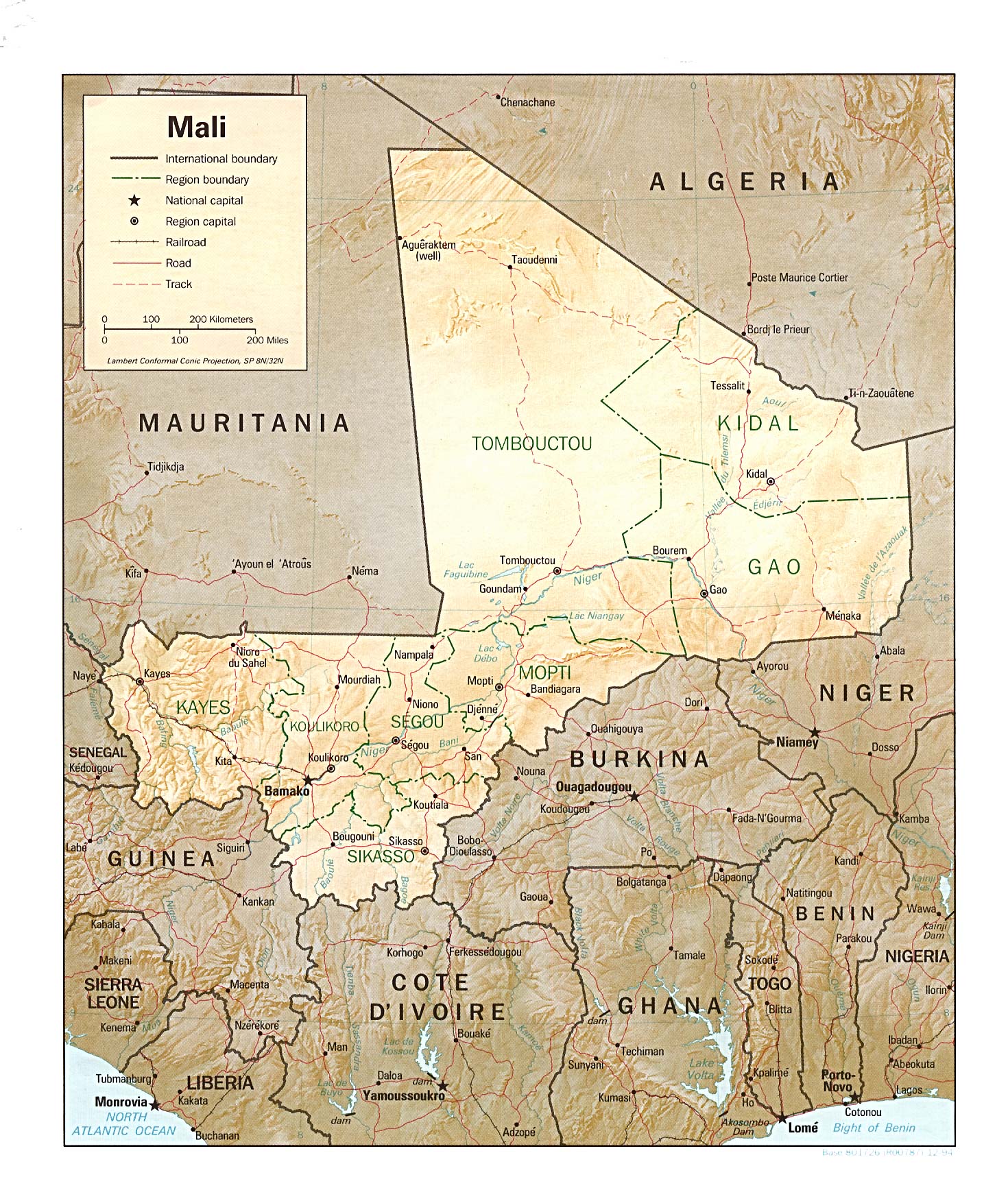
French warplanes on Feb. 2 carried out air-strikes in the remaining pocket of Mali's far north still under rebel control—but exactly which rebels remains unclear. The air-strikes apparently targeted rebel bases in Tessalit—a mountainous area near the Algerian border—and outside Kidal, the last major town still in rebel hands. (See map.) French forces claim to have captured Kidal's airport on Jan. 30, as prelude to taking the town, following the pattern in Timbuktu days earlier. But one day before that, the secular Tuareg rebels of the National Movement for the Liberation of Azawad (MNLA) claimed to have seized Kidal from jihadist forces. The MNLA have portrayed their advance into Kidal as part of a coordinated campaign against the "terrorists"; however, the fate of Kidal could be the test of whether there is any place for Tuareg autonomy in the new order.
US drone base for Niger: report
The US military is preparing to establish a drone base in "northwest Africa"—likely be located in Niger along the eastern border of Mali, where French forces are currently waging a campaign against jihadist rebels, anonymous officials told the New York Times Jan. 28. The base would supposedly facilitate intelligence gathering by unarmed surveillance drones on al-Qaeda in the Islamic Maghreb (AQIM) and related militant networks. If the plan is approved, up to 300 US military personnel and contractors could be sent to staff the base.
Algeria: army raids gas complex seized by jihadists
Algerian military forces on Jan. 17 launched an assault on the Amenas gas complex in the interior Sahara, where Islamists were holding dozens of hostages. Nearly 50 were killed in the raid, including 35 hostages, according to the spokesman of the militant group—variously named as "Battalion of the Masked" or "Signatories for Blood"—in a call to the Mauritanian news agency ANI. An Algerian government official called the number "exaggerated." Veteran jihadist fighter Mokhtar Belmokhtar AKA "Laaouar" or "Lawar" (the One-Eyed) claimed responsibility for attacking the complex, jointly operated by BP, Norway's Statoil and Algerian parastatal Sonatrach. Belmokhtar was until recently a leader of al-Qaeda in the Islamic Maghreb (AQIM), but was pushed out of the group late last year in a factional split. He has been blamed for previous abductions and the killings of both Algerians and foreigners.
Mali poised for multi-sided war
Amid sketchy and conflicting reports of how much territory the jihadists have gained in their southern thrust and to what extent last week's French air-strikes have halted it, BBC News tells us Jan. 16 that French ground forces are now engaged in the battle for the town of Diabaly, just 220 miles north of Mali's capital, Bamako. A convoy of 50 armored vehicles left Bamako overnight for Diabaly, seemingly a joint force of French and Malian troops. French Defense Minister Jean-Yves Le Drian said: "Today, the ground forces are being deployed. Until now, we had made sure there were a few ground forces in Bamako to keep our people safe... Now French ground forces are heading up north."
French air-strikes open Mali intervention
France carried out air-strikes against Islamist rebels in Mali Jan. 11, helping government forces halt a drive southward by the militants who control the country's desert north. France also evidently has introduced ground forces, with President Francois Hollande saying French troops "have brought support this afternoon to Malian units to fight against terrorist elements." He added: "This operation will last as long as is necessary." Combined Malian and French forces turned back a rebel advance, retaking the town of Konna (Mopti region, see map) that had been seized by a mixed force of the militant groups Ansar Dine and MUJAO, apparently with fighters from al-Qaeda in the Islamic Maghreb (AQIM). Mali's government declared a nation-wide state of emergency as the counter-offensive was launched.
Mali: shrines destroyed; intervention approved
Islamist militants occupying Timbuktu in northern Mali destroyed remaining mausoleums in the ancient city using pick-axes Dec. 23, a leader of the group said. "Not a single mausoleum will remain in Timbuktu, Allah doesn't like it," Abou Dardar, head of Ansar Dine, told the AFP. "We are in the process of smashing all the hidden mausoleums in the area." (Al Jazeera, Dec. 23) Three days earlier, the UN Security Council voted unanimously to approve an African-led intervention force to oust the Islamist forces from Mali's north. (The Real News, Dec. 20)
Mali: regime, rebels both divided
Mali's prime minister Cheick Modibo Diarra was forced to resign on state television Dec. 11 after junta troops arrested him for attempting to leave the country. President Dioncounda Traoré appeared on TV to appoint Django Cissoko, a French-educated university professor and presidential aide, as interim prime minister. Diarra's ouster was a show of force by a military that staged a coup in March, just as rebels were seizing the country's desert north. Following his arrest, Diarra was taken to a meeting with coup leader Capt. Amadou Sanogo, where he was accused both of failing to retake the north and of scheming to to disrupt talks now underway with the rebels.









Recent Updates
1 min 11 sec ago
15 min 11 sec ago
19 min 11 sec ago
32 min 11 sec ago
36 min 11 sec ago
43 min 11 sec ago
54 min 11 sec ago
1 hour 2 min ago
1 hour 8 min ago
1 hour 14 min ago