


Nigeria
Conspiranoids descend on #BringBackOurGirls
A team of six US military advisors has arrived in Nigeria to assist in the search for the abducted girls, now said to number 276, and provide intelligence on the captors, militant group Boko Haram. Nine more advisors are en route. Not exactly a massive intervention, although a State Department spokesperson did say, "If there are needs for more, we'll continue to assess that." (NBC) However, judging from the reaction in the "left" and conspiranoid blogosphere, you'd think it was Operation Nigerian Freedom. There's something sickeninigly inappropriate about greater concern for the 15 military advisors than the 276 missing girls. But given how these screeds are being forwarded around cyberspace by animated partisans, we feel compelled to dive into the muck and do a little deconstructing, facile as it is...
Nigeria: Boko Haram taunts president —and US
Nigerian militant network Boko Haram has claimed responsibility for the April 14 bombing of a bus station in Nyanya, a suburb of the capital Abuja, that killed 75 people. In a video message, Boko Haram commander Abubakar Shekau says he ordered the attack, but says nothing about the mass abduction of more than 100 teenage girls from a secondary school in Chibok, Borno State, most of whom are still missing. In the video, Shekau describes the bombing as a "tiny incident," and warns of many more to come. In words directed by name at President Goodluck Jonathan, Shekau says: "Jonathan, you are now too small for us. We can only deal with your grand masters like Obama the president of America. Even they cannot do anything to us. We are more than them."
Anti-gay witch-hunt in Nigeria
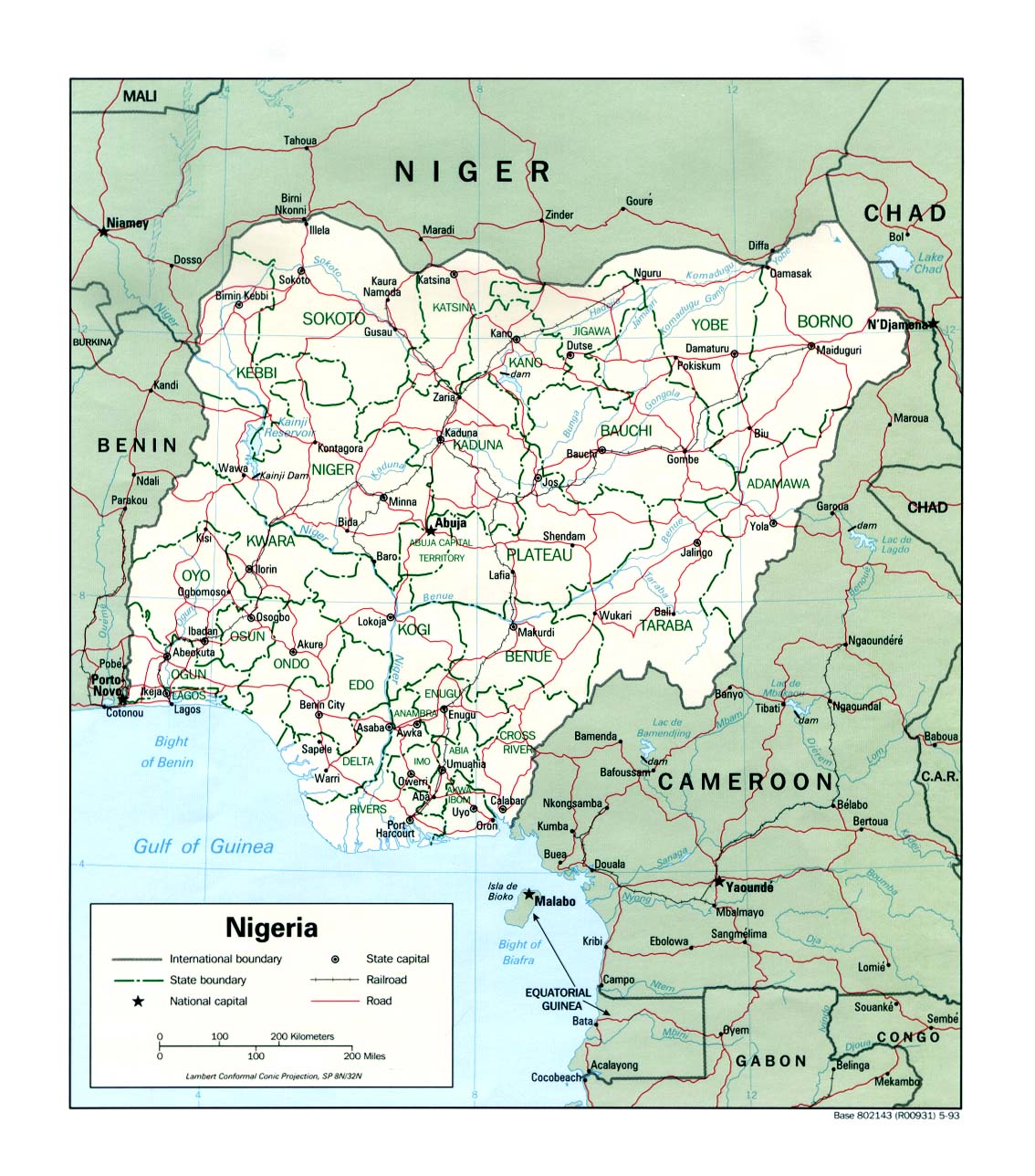
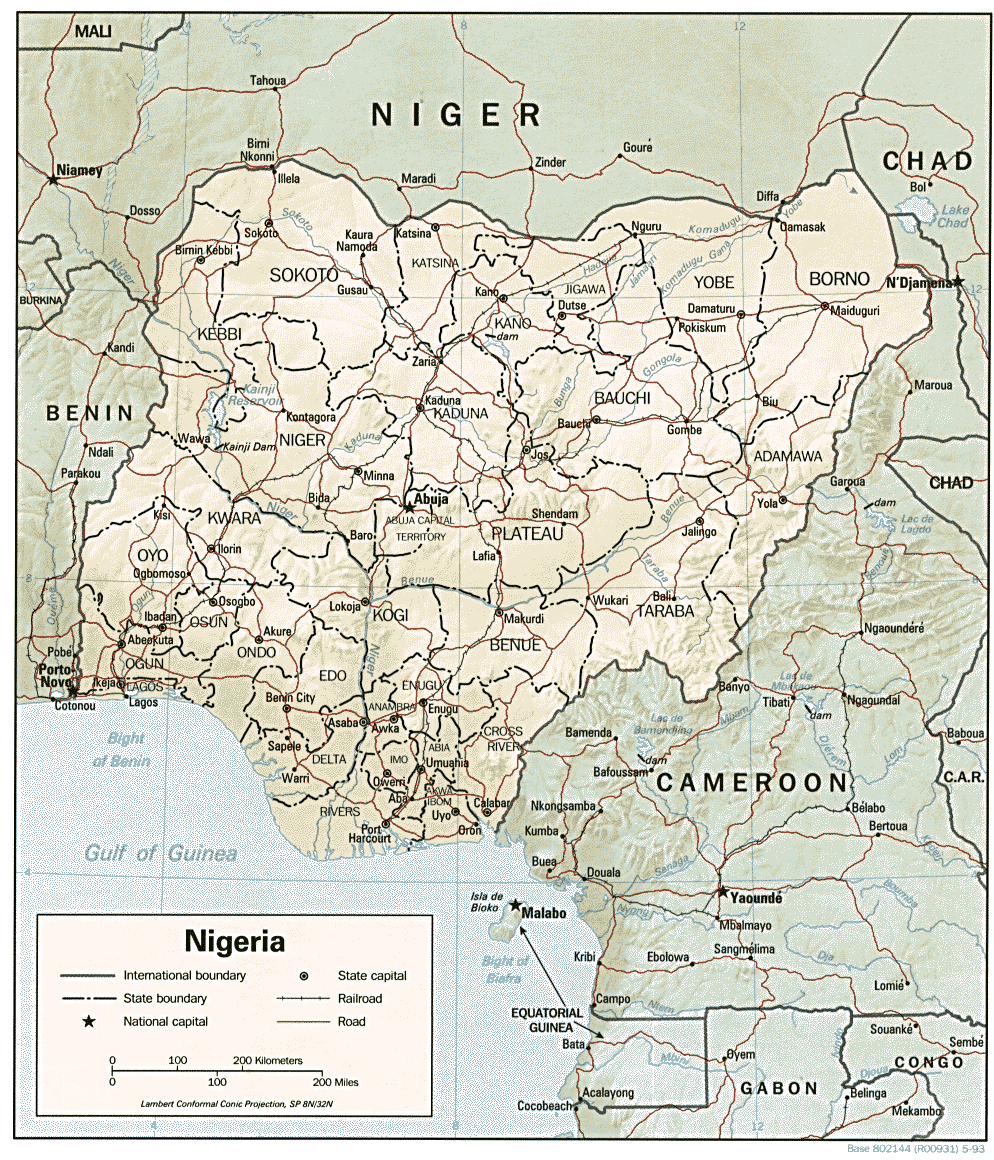
The local Islamic police, or Hisbah, in Nigeria's Bauchi state (see map) are carrying out a hunt for members of a putative "homosexual organization," whose formation was reported in a local newspaper last year. The article in Hausa Leadership daily included a list of names, and the state's Sharia Commission ordered they be arrested. If apprehended they could face death by stoning. One man convicted by the Bauchi sharia court last month was publicly lashed 20 times, the death sentence waived because the defendant showed "great remorse." On Jan. 30, an angry mob gathered outside the sharia court in Anguwan Jaki, Bauchi, and attempted to lynch seven suspected gays who were on trial there. Protesters hurled rocks at the court, breaking a window and injuring one, demanding that the defendants be stoned to death. Security forces fired tear gas canisters and several gunshots into the air to disperse the mob. Also last month, President Goodluck Jonathan signed into law the Same Sex Marriage Prohibition Act, criminalizing gay marriage and gay organizations on a national level. (BBC News, Feb. 6; Vanguard, Lagos, Jan. 30 via AllAfrica; AP, Jan. 16; AP, Jan. 13)
Nigeria: Fulani nomads named in attack on village
At least 30 people were killed by gunmen said to be Hausa-Fulani herdsmen in a raid on Shonong village, in Bachit district of Nigeria's Plateau state Jan. 7. (See map.) Over 40 homes were reportedly burned by the attackers, and livestock stolen. Thousands have been killed in a spiral of violence in Plateau state in recent years, rooted in land disputes between semi-nomadic Muslim Fulani herdsmen and mainly Christian Berom farmers. Plateau lies in a belt of savanna where Nigeria's predominantly Muslim north meets the Christian-majority south. (BBC News, Leadership, Abuja, via AllAfrica, Jan. 7)
Cameroon takes steps against Boko Haram
The authorities in Yaoundé, the Cameroonian capital, have set up tighter border controls in the Far North region to guard against infiltration by jihadist Boko Haram fighters from neighboring Nigeria as civilians flee insurgent attacks and a Nigerian military offensive, seeking safety across the border in Cameroon. A rapid response military unit has also been deployed and beefed up in the northern regions and some tourist hotels now have armed guards. "We have revised our security strategy. We have registered all expatriates and established police posts in areas where they work. There are security control posts along the border to reduce illegal entry," said Bob-Iga Emmanuel, the head of police division at the governor's office in the Far North region.
Mauritania: polls boycotted, slavery condemned
Parties that make up Mauritania's Coordination of the Democratic Opposition (COD) have announced a boycott of November's legislative and municipal elections after talks with the government collapsed without agreement earlier this month. The ruling Union for the Republic is the only party fielding candidates in every district, with the next highest representation from Islamist group Tewassoul, the only member of the 11-party COD that will field candidates. Tewassoul calls its participation a form of struggle against the "dictatorship" of President Mohamed Ould Abdel Aziz, who took power in a 2008 coup. The opposition is demanding the polls be postponed until April to allow time for a voter census and guarantees of the independence of the electoral commission. A vote was due in 2011 but has been repeatedly delayed due to disagreements between the opposition and government. The last legislative election was held in 2006. (AFP, Oct. 29; Reuters, Oct. 4)
Genocide in Nigeria?
The military and independent investigators are at odds over what happened at the northern Nigerian village of Baga on April 21, when civilians were caught in the crossfire between army troops and Boko Haram fighters. Senator Maina Maaji, who represents Borno state in the National Assembly reports that he counted 228 graves and over 4,000 destroyed houses in Baga, his hometown, on a fact-finding mission. The senator, who spoke to journalists in nearby Maiduguri April 27, alleged that those killed were defenseless youths, children and women. Nigeria's Defense Headquarters says it sent its own fact-finding team to Baga, and determined only 37 were killed. It also denied eport that it had arrested 15 soldiers in connection with the attack on Baga. The Red Cross protested that Nigerian soldiers restricted access to Baga in the days after the massacre. (Premium Times, Abuja, April 29; Daily Trust, Abuja, April 28 via AllAfrica; PM Press, Abuja, April 28; PM Press, April 23)
US high court ruling threatens human rights suits
In a unanimous decision issued on April 17, the US Supreme Court sharply restricted the use of the 1789 Alien Tort Statute for foreign nationals to sue for human rights violations that took place outside the US. The case at issue, Kiobel v. Royal Dutch Petroleum, was brought by 12 Nigerians now living in the US; they charged that Royal Dutch Petroleum (better known as Royal Dutch Shell) and other oil companies with a presence in the US conspired with the Nigerian government to commit human rights violations against Nigerians protesting environmental damage by the companies.






Recent Updates
2 days 16 hours ago
3 days 19 hours ago
5 days 1 hour ago
5 days 17 hours ago
5 days 17 hours ago
5 days 17 hours ago
1 week 7 min ago
1 week 10 min ago
1 week 12 min ago
1 week 16 min ago