




Mexico Theater
UN urges probe into Mexico journalist deaths
The UN Office of the High Commissioner of Human Rights (OHCHR) on Oct. 1 voiced concerns regarding the growing number of journalists killed in Mexico, and called for Mexican authorities to investigate these crimes and bring those responsible to justice. According to the journalists' rights group, Reporters without Borders (RSF), the discovery on Sept. 24 of the body of Maria Elizabeth Macias, editor of Primera Hora (Nuevo Laredo, Tamaulipas), marked the fourth woman journalist to be murdered in Mexico this year, as well as the eightieth journalist to be killed in the country within the last decade. The death of Macias is believed to be the result of her online blogging activity, which covered organized crime in her neighborhood.
Mexico: severed heads left as grisly message to striking teachers in Acapulco
Police in Mexico's resort city of Acapulco found five decomposing human heads left in a sack outside a primary school in the Garita neighborhood on Sept. 26. Handwritten messages were also found, apparently threatening the state governor as well as local drug lords. Five decapitated bodies were earlier found elsewhere in the city. Some 100 schools in Acapulco have been closed since last month with teachers on strike in response to extortion threats from criminal gangs who demanded they hand over half their salaries from Oct. 1. Guerrero state Gov. Angel Aguirre has promised increased police patrols and the installation of security cameras and panic buttons at schools.
US tilting to Sinaloa Cartel in Mexico's narco wars?
The US Treasury Department's Office of Foreign Assets Control (OFAC) on Sept. 21 imposed Kingpin Act sanctions on four Colombian nationals and 12 companies said to be linked to Joaquín Guzmán Loera AKA "El Chapo"—head of Mexico's Sinaloa Cartel. Guzmán faces charges in the US, but remains at large. (WSJ Corruption Currents blog, Sept. 20) The move comes amid increasing charges that US law enforcement—as well as the Mexican government—is favoring the Sinaloa Cartel in Mexico's bloody narco wars.
Mexico: have electrical workers won their two-year struggle?
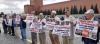
Leaders of the Mexican Electrical Workers Union (SME) reached an agreement with Mexico's federal government on Sept. 13 that ended a sit-in the unionists had been holding in Mexico City's main plaza, the Zócalo, since March. In exchange for stopping the protest, the union received a pledge that the authorities would negotiate a way for some 16,720 laid-off members to return to work. The government also agreed to free up union funds worth 21 million pesos (about $1.6 million) that it had frozen and to review the cases of SME members arrested in the two years of struggle between the authorities and the unionists.
Mexico: cartels threaten bloggers
Two half-naked mutilated bodies left hanging from a bridge in the Mexican border town of Nuevo Laredo, Tamaulipas, were accompanied by "narco-messages" scrawled on cardboard saying the killings were an example of what will happen to "Internet snitches" (relajes del internet). The message was signed "Z," an apparent reference to Los Zetas. The threat was evidently directed against Blog del Narco, which runs graphic accounts and video clips of cartel war casualties, and Frontera al Rojo Vivo, a forum set up by Monterrey newspaper El Norte. Websites have taken up the slack as Mexico's "official" media have stopped aggressive coverage of the cartel wars in response to relentless threats and attacks against journalists. (NPR's The Two-Way blog, Houston Chronicle, Sept. 15; AFP, SDPnoticias, Sept. 14)
Mexico: 71 unions demand probe of 2007 murder
Leaders of 71 unions in 18 countries have signed a letter to Mexican president Felipe Calderón Hinojosa expressing "grave concern for the lack of progress in the investigation" of the April 2007 murder of an organizer for the Ohio-based Farm Labor Organizing Committee (FLOC) in Monterrey, in the northern state of Nuevo León. After holding a press conference in Mexico City on Sept. 8, FLOC president Baldemar Velasquez delivered the letter to the Mexican president's official residence, Los Pinos.
Mexico: civilian dies in latest "drug war" mistake
Mexican marines shot and killed Gustavo Acosta Luján in the early morning of Sept. 1 in his home in Jardines de San Andrés, Apodaca municipality, in the northern state of Nuevo León. According to the Secretariat of the Navy, the marines, responding to an anonymous tip, were fired on from inside the house, and Gustavo Acosta, an "alleged criminal" with the alias "M-3," died in the operation. The marines said they found a 9 mm submachine gun, an AR-15 rifle and quantities of cocaine in the house. Mexican president Felipe Calderón Hinojosa has been using soldiers for police work in northern Mexico since militarizing the "war on drugs" shortly after he took office in December 2006.
Mexico: "Fast and Furious" fells US gun control chief
The US Justice Department announced on Aug. 30 that Kenneth Melson, the acting head of the Bureau of Alcohol, Tobacco and Firearms (ATF), had been reassigned to another position in the department and that Dennis Burke, the US attorney for Arizona, was resigning from his post. The department didn't explain the reason for the changes, but they were clearly fallout from Operation Fast and Furious, a bungled ATF program that allowed some 2,000 weapons to go from the US to Mexico, where they were probably used in drug cartel violence.










Recent Updates
1 hour 58 min ago
16 hours 7 min ago
16 hours 17 min ago
1 week 3 days ago
1 week 4 days ago
1 week 6 days ago
1 week 6 days ago
1 week 6 days ago
1 week 6 days ago
2 weeks 1 day ago