



Iran Theater
Iran protests UN nuclear monitoring station as "espionage"
Iran's government charged Dec. 9 that a newly built United Nations station to detect nuclear detonations near its border was established to allow world powers to spy on the country. Construction was completed last week on the seismic monitoring station in neighboring Turkmenistan, a few miles from the Iranian border. It is one of about 275 such facilities operating around the world to detect seismic activity set off by nuclear tests. Abolfazl Zohrehvand, an adviser to Iran's nuclear negotiator Saeed Jalili, said the international treaty that allows for setting up such observatories is an "espionage treaty."
Iran post-election rights abuses worst in 20 years: Amnesty International
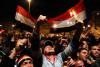
Iranian human rights violations following the disputed presidential election in June were among the worst in the past 20 years, according to a report published Dec. 12 by Amnesty International. The report, "Iran: Election contested, repression compounded," contains testimony from individuals detained during the protests that ensued after the election. According to AI, individuals were unlawfully detained, beaten, tortured, and raped, resulting in numerous deaths in detention.
Brazil: protests greet Ahmadinejad at start of South American tour
Protests greeted Mahmoud Ahmadinejad in Brazil at the start of a South American tour Nov. 23. On Rio de Janeiro's Ipanema beach, thousands of demonstrators from groups representing gays, artists, Christians, Jews, and Holocaust survivors carried protest banners and a giant cage containing white balloons as a symbol of Iran's "repressed values." Large protests were also held in Sao Paulo. Opposition politicians also criticized the visit. "One thing is a diplomatic relationship with dictatorships, another is to welcome their leaders in your home," Jose Serra, the Sao Paulo state governor, wrote in a newspaper opinion.
Iran: court sentences ex-VP for role in post-election unrest
Iran's Islamic Revolutionary Court has sentenced former vice president and reformer Mohammad Ali Abtahi to six years in prison for his role in the unrest that followed the disputed June 12 presidential elections, according to Iranian news agencies Nov. 21. Abtahi, who had been in custody since just after the election, has been temporarily released on $700,000 bail pursuant to Iranian law which allows any person sentenced to more than three months in jail to be released on bail pending appeal. He served as vice president under Mohammad Khatami from 1997 to 2005. Abtahi has 20 days to appeal his sentence.
Iran: authorities to investigate doctor's death after torture testimony
Iran's judicial authorities plan to investigate the death of a young doctor who had testified before parliament about prisoner abuses in the aftermath of the disputed presidential election. Dissident websites said that Dr. Ramin Pourandarjani, 26, was killed in order to silence him, as he was the only independent witness to be able to corroborate the charges of torture.
US seeks seizure of mosques from Islamic foundation alleged to be Tehran front
The US government on Nov. 12 amended a complaint against Islamic charity the Alavi Foundation to include a request for the seizure of assets, including four mosques, claiming that the organization is actually controlled by the Iranian government. The amended complaint, originally filed in 2008, alleges that Alavi is funneling assets to fund Iran's nuclear program in violation of US law. The government had already sought to seize Alavi's 40% interest in a New York office building, but the amended complaint adds properties in Maryland, Texas, California, New York, each of which contains an Islamic center or mosque; 100 acres of land in Virginia; and nine US bank accounts.
Iran hangs Kurdish activist as "enemy of God"
Iranian authorities hanged Kurdish activist Ehsan Fattahian, 28, on Nov. 11 in Sanandaj Central Prison, Kordestan province. He was accused of "armed struggle against the regime" and "enmity against God." An Internet campaign had gathered over 10,000 signatures in recent days calling on Tehran to stop the execution. Amnesty International, Human Rights Watch and several Iranian human rights organizations issued statements calling to halt the execution. Despite reportedly being tortured, Ehsan refused to admit to participating in armed activities. It was only during the appeals process was he declared as an "enemy of God" and sentenced to execution.
Report: Iranian incursion into Pakistan
Pakistani security forces reportedly arrested 12 personnel of the Iranian Revolutionary Guards near the border town of Mashkel Oct. 26. According to sources, the Revolutionary Guards were travelling in two vehicles and were intercepted at Jowdar by Pakistan's Frontier Corps. While one Frontier Corps spokesman said the 12 were civilians, widespread media accounts in Pakistan say they were Revolutionary Guards carrying out an operation against the Jundallah insurgent organization. (The Nation, Islamabad, Oct. 27)










Recent Updates
4 days 7 hours ago
5 days 2 hours ago
5 days 9 hours ago
6 days 5 min ago
6 days 15 min ago
2 weeks 2 days ago
2 weeks 3 days ago
2 weeks 4 days ago
2 weeks 5 days ago
2 weeks 5 days ago