


WW4 Report
West Bank: one injured at Bil'in anti-wall rally
Israeli forces injured one Palestinian at the weekly anti-wall rally Friday Jan. 28 in the West Bank village of Bil'in, near Ramallah. Soldiers fired tear gas to disperse dozens of locals and international demonstrators protesting Israel's separation wall, which confiscates large swathes of village land. The Israeli military said troops responded to protesters throwing rocks.
Egypt: countdown to Mubarak's fall?
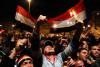
Thousands of people took to the streets in Egypt in a fifth day of protests Jan. 29, despite President Hosni Mubarak appearing on TV to announce he is sacking his government. In Cairo, after police used rubber bullets and tear gas to break up a protest at the Interior Ministry on Tahrir Square, they resorted to real bullets—leaving some ten protesters dead. Clashes with police are also reported from Ismailiya and Alexandria, where several police stations were torched. At least six are reported dead in Alexandra, including one police officer. Police finally retreated in Alexandra, leaving the city in the hands of protesters. Opposition activist Mohamed ElBaradei, who arrived in the country three days earlier, called for Mubarak to step down, saying "the Egyptian people have revolted against 58 years of repression." (NYT, Jan. 29; BBC News, AlMasry AlYoum, AlMasry AlYoum, Reuters, Jan. 28)
US drops, Russia adopts color-coded terror alerts
The US is doing away with the color-coded terrorism alerts adopted by the Bush administration in the wake of 9-11, Homeland Security Secretary Janet Napolitano announced in the State of Homeland Security address at George Washington University on Jan. 27. The following day, Russia's Duma voted to adopted such a system in response to this week's deadly bombing at the Moscow airport. (UPI, Jan. 28; RTT, Jan. 27)
Did US firm sell Egypt cyber-snoop tech?
A US company apparently sold Egypt technology to monitor Internet and mobile phone traffic—now being used by the regime to crack down on communications as protests erupt across the country. Boeing-owned, California-based Narus sold Telecom Egypt, the state-run Internet service provider, "real-time traffic intelligence" equipment, more commonly known as Deep Packet Inspection (DPI) technology. DPI is content-filtering technology that allows network managers to inspect, track and target content from Internet users and mobile phones as it passes through Web routers.
Tunisia: new cabinet instated, protests continue
Tunisia's interim regime followed through on its pledge to replace the cabinet of ousted president Zine el-Abidine Ben Ali Jan. 28, sacking the ministers of defense, interior and exterior. The changes were announced by Prime Minister Mohamed Ghannouchi—himself a target of resignation demands by protesters who continue to take to the streets.
Oaxaca meets the new boss —or does it?
The new governor of Mexico's conflicted Oaxaca state, Gabino Cué Monteagudo, was sworn in last month after winning on the ticket of United for Peace and Progress Coalition, made up of all the state's major opposition parties (PAN, PRD, PT and Convergencia). But much of the state bureaucracy remains loyal to the long-entrenched machine of the Institutional Revolutionary Party (PRI). Upon taking office, Cué says he found the bureaucracy crippled by years of endemic corruption. "There were no computers," he said. "We found that the staff payroll didn't match who actually was working... The bank statements were out of balance. The state automotive fleet was in terrible shape." Cué also faces local conflicts in 47 of the state's 570 municipalities, where local elections were annulled because of irregularities. (Miami Herald, Jan. 26)
Pentagon moves ahead with Colombian bases plan
US military agencies in September 2010 signed contracts for construction at Tolemaida, Larandia and Málaga bases in Colombia worth nearly $5 million, according to documents obtained by the anti-war group Fellowship of Reconciliation. US military contracts for Tolemaida in the fiscal year ending Sept. 30 were larger than the last four years combined.
Yemen protesters on Code Pink
Thousands again took to the streets of Sana'a Jan. 27, calling for the resignation of President Ali Abdullah Saleh. "It's over Saleh, your time is up!" chanted a crowd of students, rattling the gates of Sana'a University. The protests are organized by an opposition coalition, including the Islamist party Islah, as well as the Socialist and Nasserite parties. Emphasizing a commitment to nonviolence, the protesters have adopted pink as their color, but warned that they will escalate to "red" to press their demands if necessary. (The Guardian, The Lede, Jan. 27)










Recent Updates
2 days 11 hours ago
3 days 10 hours ago
3 days 12 hours ago
1 week 1 day ago
1 week 1 day ago
1 week 1 day ago
1 week 1 day ago
1 week 1 day ago
1 week 1 day ago
1 week 1 day ago