


Venezuela
Trump-Bukele detention deal heads for clash with courts
The Trump administration's deportation policies took center stage this week as Salvadoran President Nayib Bukele visited the White House, courts continued challenging the legality of the deportations, and a Maryland senator travelled to El Salvador in an attempt to make contact with a man known to be wrongfully deported.
Trump-induced migration crisis in Mexico
President Donald Trump's migration crackdown has been credited with reducing flows northward towards the United States, but it is leaving hundreds of thousands of migrants and asylum seekers trapped in limbo further south, unsure whether to take riskier journeys to try to reach the US and anxiously wrestling with what to do next.
Venezuela: Trump restores sanctions on Chevron operations
President Donald Trump announced on Feb. 27 that the US government is revoking a special permit granted to energy giant Chevron to pump and export Venezuelan oil. The move, which reverses a 2022 decision by Biden to allow the company to bring Venezuelan oil to US markets by exempting it from economic sanctions, removes one of the South American country's few economic lifelines at a time of deepening crisis. In his post on TruthSocial, Trump claimed that the Venezuelan government had failed to keep up its side of the original bargain to meet "electoral conditions." He also charged that the "regime has not been transporting the violent criminals they sent into our Country...back to Venezuela at the rapid pace that they had agreed to." (NACLA Update)
Panama feels pain of Trump migration crackdown
An eight-year-old Venezuelan girl died and 20 survivors were rescued by Panamanian authorities from a Feb. 21 shipwreck during a journey from Panama's northern port of Llano Carti to the Colombian border.
Trump orders expansion of Gitmo migrant facility
President Trump has ordered the construction of a 30,000-bed facility to hold migrants at the notorious US naval facility at Guantánamo Bay, Cuba, as part of his mass deportation campaign. The US base has been used to house terrorism suspects since 2002, becoming synonymous with torture and unlawful imprisonment. The US has secretively detained refugees and migrants intercepted at sea at Guantánamo Bay for decades, but the facility has not previously been used for people apprehended on US soil or at this scale.
Trump rushes out hardline migration agenda
During his first days back in office, Donald Trump rapidly started implementing his hardline migration agenda, including by declaring a state of emergency at the US southern border. The move allows his administration to access billions of dollars to expand the building of a border wall and to deploy the military and national guard to the area. Around 1,500 active duty soldiers are already being deployed. Trump also reinstated the controversial "Remain in Mexico" program from his first administration. This policy, which requires people to wait for asylum appointments in Mexico, helped to create a now-perennial humanitarian crisis in northern Mexico. The Trump administration has also shut down CBP One—a cell phone app for scheduling asylum appointments—leaving thousands of people stranded in Mexico, and suspended the US refugee resettlement program, as well as cancelling travel plans for refugees who had already been approved to enter the country. Trump's promised mass deportation of millions of undocumented people has yet to get underway, but his administration has begun laying the groundwork for expanded immigration raids—potentially including on schools, churches, and hospitals—and has threatened to prosecute any local officials who don't comply.
Will US-Cuba deal survive Trump?
Outgoing President Joe Biden informed Congress Jan. 14 that he would lift the US designation of Cuba as a State Sponsor of Terrorism (SSOT), as part of a deal facilitated by the Catholic Church to free political prisoners on the island. The followiing day, the Cuban government announced it would release 553 prisoners who had been jailed for "diverse crimes." The agreement also eases some economic pressures on Cuba, including lifting sanctions on companies run by the Cuban military and the suspension of a legal provision that had enabled Cuban Americans to sue the Cuban government for confiscated property. The Cuban government responded by saying that the United States was taking "steps in the right direction" but emphasized that "the economic war remains."
Podcast: world war or world revolution?
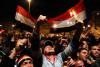
In Episode 239 of the CounterVortex podcast, Bill Weinberg provides an overview of the protest waves and popular uprisings going on across the planet—in Kenya, Uganda, Nigeria, Bangladesh, India, China, Serbia, Venezuela, and in Israel. This as worldwide protests in solidarity with the Palestinians of Gaza continue. Amid ongoing protests against Netanyahu in Israel, there have also been protests against Hamas in Gaza. Despite internal dangers and contradictions in all these upsurges, there is a sense that we could be approaching a revolutionary moment such as that seen in 2011—the year of the Arab Spring and Occupy Wall Street. And with the planet on an accelerating trajectory toward world war, the linking of these upsurges through conscious solidarity and the infusion of anti-war content to their demands is urgently mandated.








Recent Updates
1 day 23 hours ago
2 days 18 hours ago
3 days 2 hours ago
3 days 16 hours ago
3 days 16 hours ago
1 week 6 days ago
2 weeks 20 hours ago
2 weeks 2 days ago
2 weeks 2 days ago
2 weeks 2 days ago